
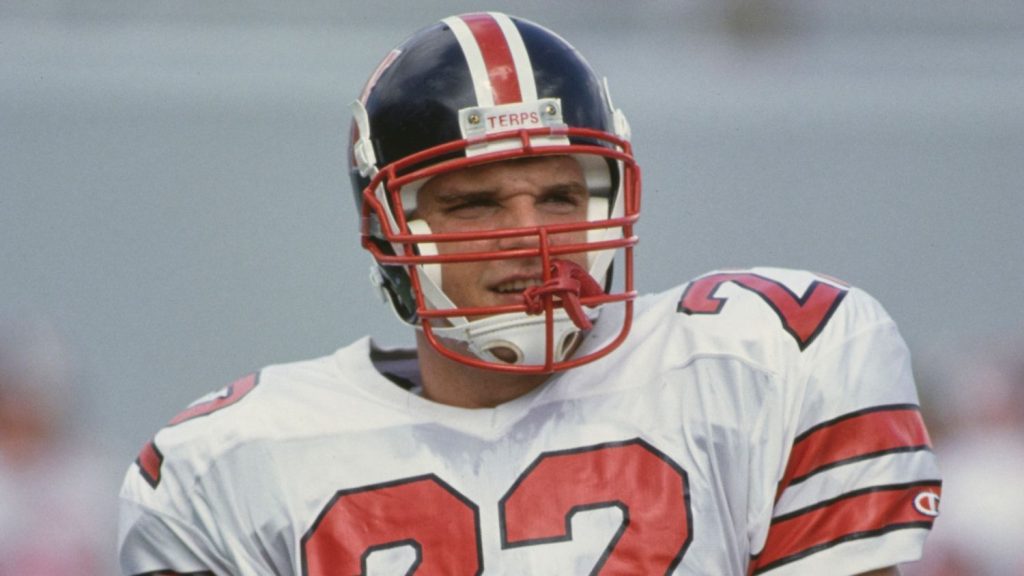
I can tell you from first-hand knowledge that Frank Wycheck was an incredible player on the field; and he was a fierce competitor who earned the respect of everyone who faced him. As someone who played against Frank during my time at UNC, I can tell you firsthand that he was the kind of player who left it all out there during the game. Whether it was during his standout years at Maryland or in the NFL with the Titans, Frank’s passion and drive were undeniable. I saw it up close, lining up against his defense, and watching him play multiple positions on offense as a running back, tight end, and H-back during those intense college matchups in the ACC. You could feel his tenacity and commitment to excellence every time you squared off.
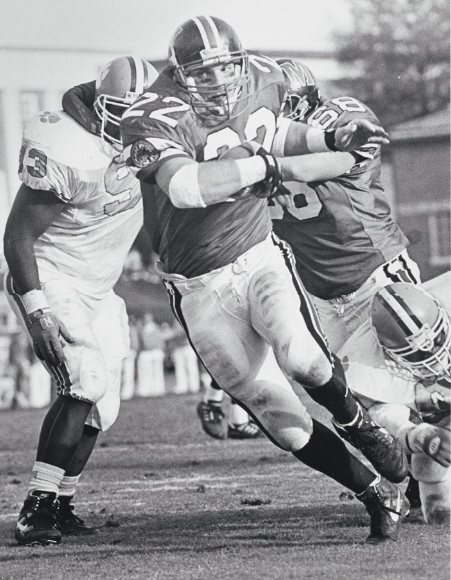
At Maryland, Frank was already making a name for himself primarily as a top-tier tight end, showcasing his rare combination of size, athleticism, and sharp football IQ. Watching him catch balls from Scott Zolak, it was clear that he had the ability to dominate a game. He was a standout even then, and I knew, even as a rival, that he would make an impact in the NFL. His toughness and relentless work ethic seemed evident, and it came as no surprise when he went on to have such a successful career with the Titans, where he became a three-time Pro Bowler and earned his place in the franchise’s Ring of Honor.
But as much as Frank was a competitor to be reckoned with on the field, his post-football journey reveals the harsh reality that far too many players face after they retire—dealing with the brutal, debilitating effects of chronic traumatic encephalopathy (CTE). Frank’s family recently confirmed that he had been living with Stage III CTE at the time of his death in December 2023, just over a year ago. This tragic diagnosis, confirmed by studies from Boston University’s Chronic Traumatic Encephalopathy Center, underscores the devastating impact repeated head trauma has on former athletes.
As a three-time Pro Bowler, Frank’s career was reflective of his skill. He displayed it on a national stage in a beautiful game. But it came at a great personal cost. Frank’s family has bravely shared their journey, hoping to shine a light on the often-overlooked challenges NFL players face long after their careers end. His daughter, Deanna Wycheck Szabo, spoke poignantly about the family’s struggle with understanding his symptoms and the relief they now feel in knowing the cause. “Our family is grateful to learn of his confirmed CTE diagnosis in hopes to continue our father’s desire to bring awareness, increased intervention, education, and support for NFL alumni and their families related to CTE,” she said.
Wycheck’s story is an important reminder of the toll the game can take on the toughest of its players. After stepping away from the field, Frank continued to contribute to the game as a color commentator for the Titans’ radio network, but his health issues—lingering head problems and cognitive decline—forced him to step down in 2017. It’s heartbreaking to think of a man who gave so much of himself to football, who was such a force in his prime, grappling with something that stripped him of so many of the qualities that made him the person and player we admired.
“My father put his body on the line throughout his career,” said Wycheck Szabo. “He loved the game and even more so loved his teammates. After retirement, he fought for years to bring light to his post-NFL journey and the fears he had around his struggles and symptoms that he knew whole-heartedly was CTE.” Frank’s battle wasn’t just with the physical aftermath of football—it was also with the emotional toll of not feeling understood, of having his pain go unnoticed for so long.
As someone who competed against Frank and admired his game, I can’t help but feel a profound sense of loss for the player and the man. Frank was a warrior on the field, but off it, he fought a different battle—one that was invisible to most of us, yet far more damaging. “Reflecting back, I wish our family had been educated on the signs and symptoms of CTE,” Wycheck’s daughter said. “Instead of believing that something was inherently wrong with him, we now know he was doing the best he could as a father and friend under circumstances beyond his control.”
Frank Wycheck’s legacy is one of excellence, toughness, and undeniable skill, but his family’s efforts to bring awareness to CTE will ensure that his story is also one of advocacy. Through their work, they hope to ensure that future NFL alumni don’t face the same struggles without the proper resources and support. As we remember Frank—whether from his incredible plays with the Titans, his time at Maryland, or his impact on those of us who played against him—let’s also honor his legacy by acknowledging the true cost of the game. It’s a cost that continues to ripple through the lives of former players, safety measures have increased as a result, and Frank’s story is one of many that represents a continuance of the call to action to protect those who gave everything for the sport.
A Message From Packed House Sports
To all of those that CTE has touched, and to those we’ve lost to its devastating grip, we see you. Your courage, on and off the field, will never be forgotten. The sacrifices you made for the game have shaped the sport, and made an impression upon the lives of countless fans, teammates, and families. While the effects of CTE may be invisible, your strength in the face of it is mirrors the heart and soul you gave to the game.
To Frank Wycheck’s family, we are happy you now have some semblance of closure. And, our hearts are with you. Frank’s legacy—his talent, leadership, and the way he gave everything to the sport—will forever inspire us. We are deeply sorry for your loss, and we stand with you in the continued fight to raise awareness and support for those affected by CTE. May you find comfort in knowing that Frank’s story is making a difference, and that his courage, even in the face of this invisible battle, will live on in every step we take toward change.