
The Rise of Leadership and Ownership in Sports: We hope you’ve noticed the historic milestone for broader representation across leagues
The 2024-2025 season has been pivotal in professional sports, marked by a significant increase in minority ownership across several major leagues, including the NFL, NBA, and Formula 1. This shift is transforming not just who leads and owns teams, but also how sports organizations engage with their communities and approach management. The growing presence of leaders from diverse backgrounds is creating a more dynamic, inclusive, and forward-thinking environment across professional sports. These changes reflect a broader societal movement towards equity, offering new opportunities for leadership that better reflect the diverse fanbases and communities that drive the industry’s success.
A New Era of Diverse Leadership in Sports Ownership
The 2024-2025 season marks a critical turning point in sports ownership. These changes are not only about expanding opportunities for minority owners but also about enriching team management and decision-making with perspectives from various cultures, industries, and life experiences. The increasing participation of underrepresented groups in ownership structures is helping reshape the leadership culture within professional sports.
NFL: A Landmark Shift in Ownership Representation
The NFL has historically been dominated by a small, homogenous group of elite families. However, the 2024-2025 season features the highest number of minority owners in league history. This transformation is particularly significant considering the NFL’s diverse player base.
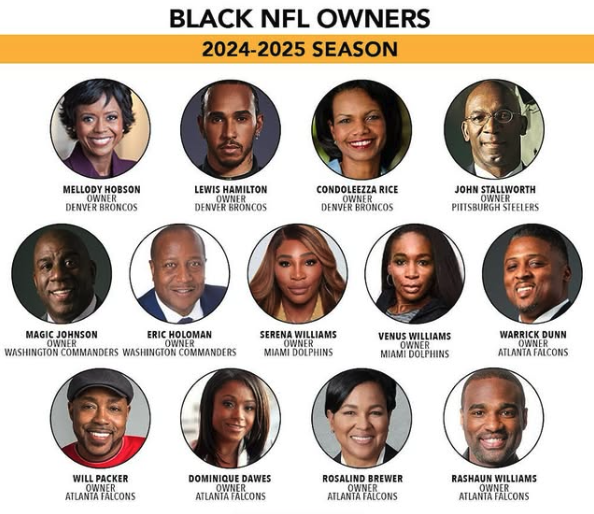
- Venus and Serena Williams – The Williams sisters became the first women of color to invest in the NFL when they purchased a minority stake in the Miami Dolphins in 2009. Their investment has proven to be highly successful, with the Dolphins’ valuation increasing from $1.02 billion to $4.6 billion.
- Magic Johnson – In 2023, Magic Johnson expanded his ownership portfolio by joining the Washington Commanders in a record $6.05 billion deal. Johnson’s involvement represents a broader trend of athletes diversifying their investments beyond their primary sports.
- Mellody Hobson – Mellody Hobson, co-CEO of Ariel Investments, joined the Denver Broncos ownership group in 2022. Hobson’s presence in sports ownership underscores how financial expertise and strategic thinking can positively influence team management.
- Will Packer and Other Influential Figures – The Atlanta Falcons boast one of the most diverse ownership groups in the NFL, including film producer Will Packer, Olympic gold medalist Dominique Dawes, and business leaders like Rosalind Brewer and Rashaun Williams. Their collective influence is reshaping how the team engages with its fans and manages business operations.
- Shahid Khan – Pakistani-American Shahid Khan, owner of the Jacksonville Jaguars and Fulham FC, remains one of the most prominent minority owners in global football, contributing to the growing diversification of sports ownership.
NBA: Expanding the Circle of Ownership
The NBA has long been a leader in promoting diversity, and the ownership ranks continue to reflect this commitment. In addition to figures like Magic Johnson, whose legacy of ownership has inspired countless others, the NBA is seeing new leadership emerge across various sectors:

Joe Tsai – Joe Tsai, a Chinese-Canadian billionaire, is the owner of the Brooklyn Nets. He also holds a controlling stake in Barclay’s Center and has invested heavily in growing the Nets’ global presence, particularly in China.
Michael Jordan has built on his legacy as one of the wealthiest athletes and a savvy entrepreneur. Beyond basketball, his most notable asset is his majority ownership of the Charlotte Hornets, making him the second African American to own a majority stake in an NBA franchise. Jordan’s business empire extends into various sectors, including Crisis Management International, long-term partnerships with Nike that propelled his Jordan Brand, real estate, car dealerships, and the successful Jumpman apparel line. Additionally, he co-owns a NASCAR Cup Series team, 23XI Racing, with driver Denny Hamlin, further expanding his footprint in sports ownership. As a business mogul, Jordan has solidified his influence across industries, inspiring a new generation of athletes to pursue ownership as the next step in their careers.
LeBron James and Maverick Carter – LeBron James and his business partner Maverick Carter have expanded their influence across sports, acquiring stakes in both the Boston Red Sox and the English soccer team Liverpool FC. Their growing investment portfolios reflect a broader trend of athletes moving into ownership in a variety of sports, showing that leadership transcends individual disciplines.
Shaquille O’Neal has transformed from NBA legend to a highly successful entrepreneur, expanding his influence across multiple industries. In addition to his ownership stake in the Sacramento Kings, O’Neal has investments in fast food franchises like Krispy Kreme and Papa John’s, health and wellness brands like GNC, real estate, technology, and e-commerce—most notably co-owning The General Insurance. His diverse portfolio reflects sharp business acumen, positioning him as one of the most versatile athletes-turned-investors. O’Neal’s post-basketball career exemplifies how athletes are leveraging their wealth and influence to shape the sports industry and build lasting legacies beyond the court.
Subrata Roy – The Indian billionaire Subrata Roy co-owns the Sacramento Kings with Vivek Ranadivé, an Indian-American entrepreneur. Roy’s inclusion in ownership further strengthens the NBA’s increasing global diversity.
Formula 1: Shifting the Landscape of Motorsport
In the traditionally elite world of Formula 1, the recent rise of more diverse ownership marks a significant step toward making the sport more accessible and inclusive:
Lewis Hamilton – Seven-time Formula One world champion Lewis Hamilton is not only a dominant force on the track but also a vocal advocate for social change. His investment in the Denver Broncos in 2022 is a further extension of his commitment to expanding leadership opportunities across sports, making him one of the most influential figures in the global sports landscape.
A League of Their Own: The XFL’s Growth Under Dwayne Johnson
Dwayne “The Rock” Johnson and business partner Dany Garcia have made significant strides in the XFL since acquiring the league in 2020. Under their leadership, the XFL has focused on innovative gameplay, fan engagement, and player development. The league has secured broadcasting deals with ESPN and Fox Sports, expanding its visibility. In 2023, the XFL merged with the USFL to create a more unified and sustainable spring football league, further cementing its place in American sports.
Soccer: A Global Expansion of Leadership
Soccer, the world’s most popular sport, continues to see an influx of entrepreneurs from diverse backgrounds. Notable examples include:
- Black Entrepreneurs in MLS – The growth of diverse ownership in Major League Soccer (MLS) includes Magic Johnson and other investors in Los Angeles FC (LAFC), highlighting the increasing representation of businesspeople from various fields in soccer.
- Sundar Pichai – Sundar Pichai, CEO of Google, is part of an investor group purchasing a stake in Tottenham Hotspur, signaling the increasing involvement of tech executives in sports ownership.
- Kim Ng – Kim Ng, a Chinese-American, is the first woman to serve as the general manager of a Major League Baseball team, but she is also a key figure in the ownership group of the NWSL’s Chicago Red Stars, which has been growing in prominence and leadership.
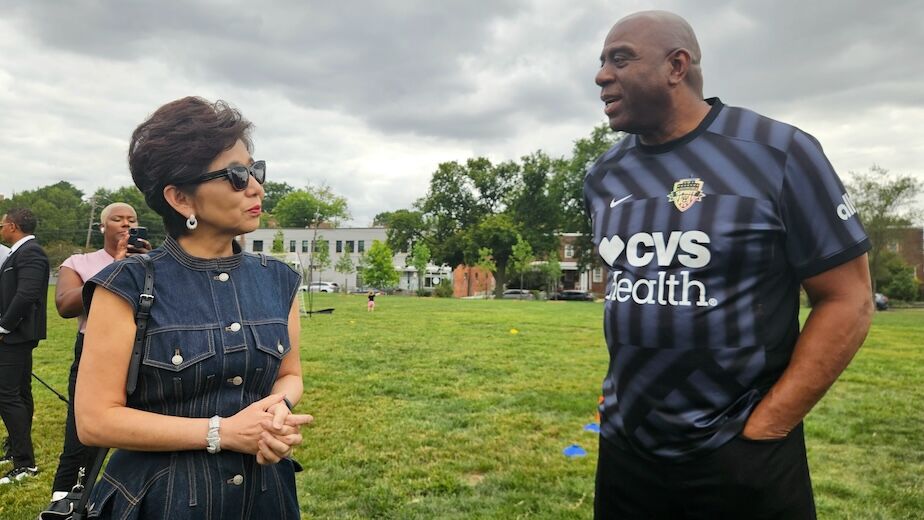
- Michele Kang – Michele Kang, a Korean-American entrepreneur, is the majority owner of the Washington Spirit in the NWSL. Her leadership marks a major moment in women’s sports ownership and reflects the growing diversity in sports leadership.
Why This Shift Matters: The Power of Broader Perspectives
The growing presence of diverse owners and executives in sports is reshaping the industry in several important ways:
- Innovative Business Practices – Leaders from varied backgrounds bring fresh ideas and strategies that challenge traditional models, as seen with figures like Mellody Hobson and Will Packer, who are changing the business dynamics of their teams.
- Engagement with Broader Fanbases – As ownership becomes more representative of their communities, sports teams are connecting with a wider fanbase and cultivating loyalty through initiatives that resonate with more diverse audiences.
- Building a Legacy of Opportunity – These changes provide role models for the next generation, showing that leadership in sports can be achieved by individuals from all walks of life. The continued push for broader representation will sustain the growth and success of the industry.
Looking Ahead: A Future of Broad Representation
While the 2024-2025 season has made significant strides, there’s still much work to be done. The shift toward more diverse leadership in sports is just beginning, and ongoing efforts are needed to ensure that ownership and executive roles reflect the full diversity of players, fans, and communities. The future of sports will continue to evolve with a
