
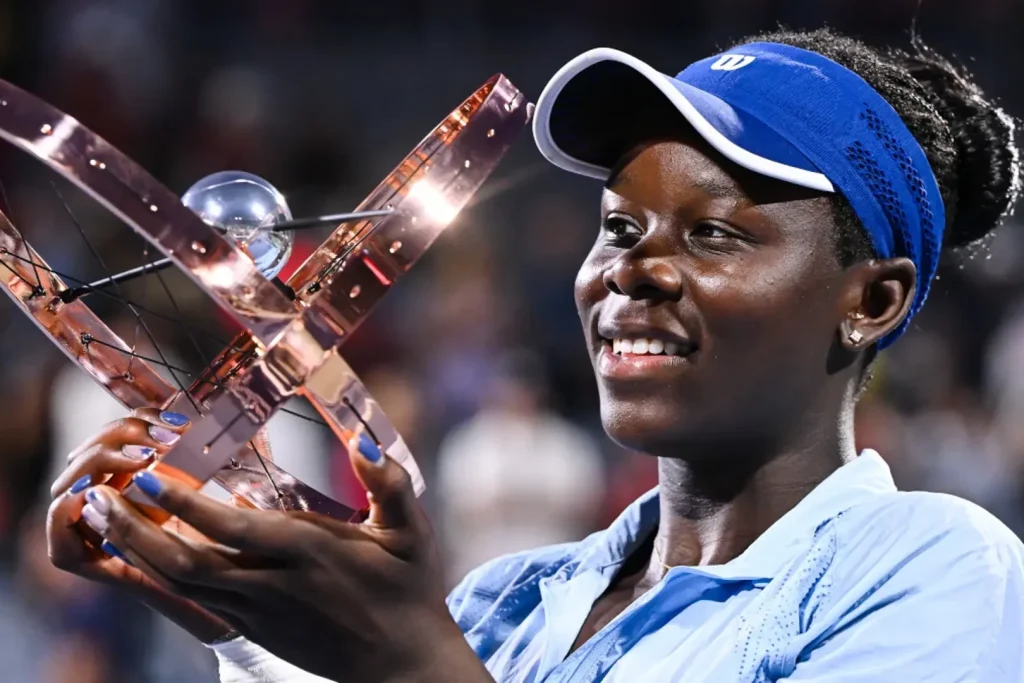
There are moments in sports that remind us why we fell in love with competition in the first place. Thursday night in Montreal delivered one of those magical experiences as 18-year-old Victoria Mboko completed what can only be described as a fairy tale run to her first WTA title at the National Bank Open.
What made this victory so special wasn’t just the final scoreline—a remarkable comeback from a set down to defeat four-time Grand Slam champion Naomi Osaka 2-6, 6-4, 6-1—but the story woven throughout this extraordinary week. Here was a teenager, playing with a stiff and swollen wrist that required hospital visits for X-rays and MRI scans just hours before the final, refusing to let anything dim her moment in the spotlight.
A Dream Deferred, Then Delivered
When Mboko dropped to her knees after Osaka’s final shot sailed into the net, the eruption from the packed Montreal crowd told the whole story. This wasn’t just another tennis match—this was a young woman’s dreams materializing before our eyes. Born in Charlotte to Congolese parents and raised in Toronto, Mboko represents the beautiful diversity of Canadian tennis, joining the exclusive company of Faye Urban (1969) and Bianca Andreescu (2019) as the only Canadians to capture their home tournament in the Open era.
“I would have never thought something like this would have came so suddenly,” Mboko reflected afterward. “It just proves that your dreams are closer than they [seem].”
The teenager’s journey to the title was nothing short of spectacular. She conquered not one, but four major champions during her run, including a dominant 6-1, 6-4 victory over top-seeded Coco Gauff. Each victory built momentum, each match revealed new layers of mental fortitude that many players twice her age would envy.
Resilience Under Pressure
Perhaps the most inspiring aspect of Mboko’s triumph was watching her compete through obvious physical discomfort. The wrist injury, sustained in Wednesday’s semifinal, could have derailed everything. Instead, it became a testament to her character. Playing with a bandaged wrist, managing 13 double-faults, and seeing her serve speeds drop—none of it mattered when the moment demanded everything she had.
“There’s some moments where it was aggravating me a lot,” she admitted, “but I feel like it was the final. I just kept saying to myself, ‘You have one more to go.'”
That “one more” mentality, the ability to compartmentalize pain and focus on the prize within reach, speaks to a maturity far beyond her years.
Osaka’s Inspiring Return
While this was undoubtedly Mboko’s night, we cannot overlook the significance of Naomi Osaka’s journey to the final. The former world No. 1 has been fighting her way back to elite competition after stepping away for 15 months and welcoming daughter Shai in July 2023. Her run to the Montreal final marked her best performance in a WTA 1000 event since Miami in 2022.
Though Osaka’s evening ended in disappointment—and her post-match demeanor reflected that frustration—her presence in the final represented its own form of victory. Motherhood has transformed many athletes, and watching Osaka rediscover her competitive fire has been one of the tour’s most compelling storylines. While she remains winless since the 2021 Australian Open, her path back to contention feels more promising than it has in years.
A Historic Achievement
The numbers surrounding Mboko’s victory tell their own remarkable story. She becomes just the third wild card to win a WTA 1000 title, joining Maria Sharapova (Cincinnati 2011) and Bianca Andreescu (Indian Wells 2019) in that exclusive club. Her ranking will skyrocket from 85th to 25th in the world—a leap that changes everything about her career trajectory.
More importantly, she becomes the second-lowest-ranked player to win either a WTA 1000 or Tier-1 title since 1990, a statistic that underscores just how improbable this week has been.
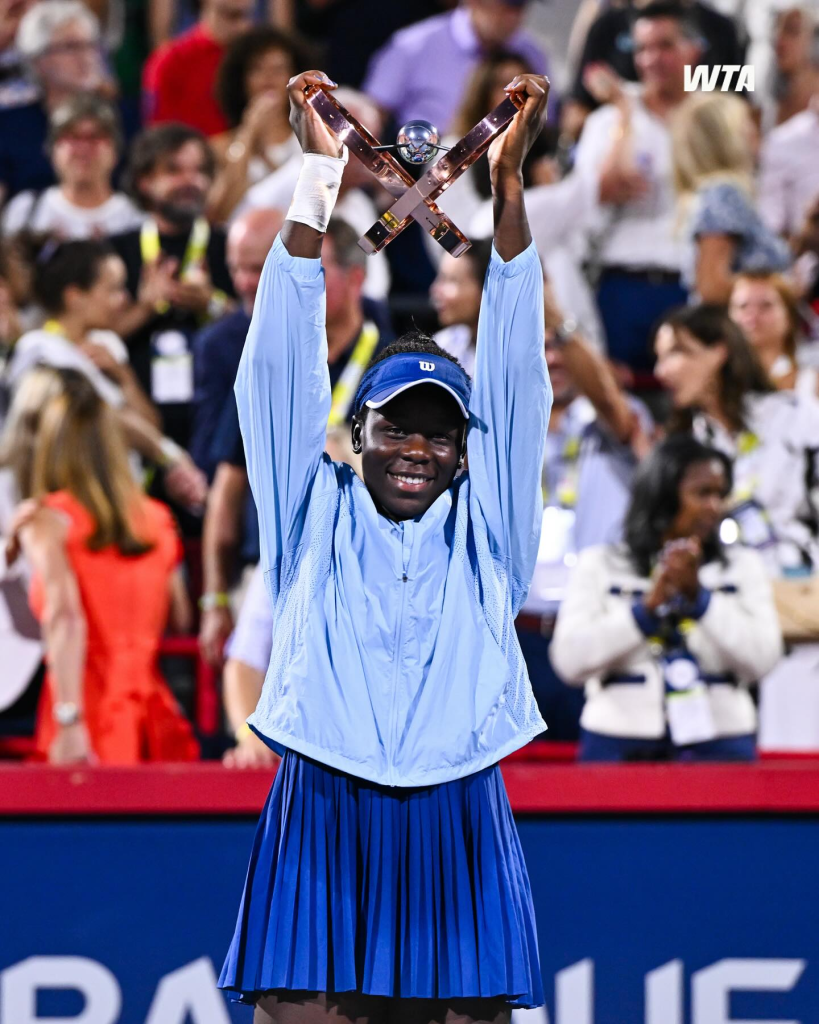
The Beauty of the Moment
What struck me most about Thursday night wasn’t just the tennis—though converting eight of nine break points in a final shows remarkable composure—but the pure joy radiating from everyone involved. The Montreal crowd was so enthusiastic the umpire had to repeatedly ask for quiet during points. When Mboko addressed them afterward, mixing English with “I love you!” in French, the connection between player and audience felt genuine and electric.
Sports at its finest gives us these moments where individual achievement becomes collective celebration. A young woman’s dreams realized become a community’s shared triumph. An 18-year-old’s breakthrough reminds us all that extraordinary things can happen when preparation meets opportunity.
As We Move Forward
As the tennis world turns its attention to the next tournament, the next storyline, Thursday night in Montreal will linger as a reminder of what makes sports so captivating. Victoria Mboko’s victory represents more than a title—it’s proof that dreams really are closer than they seem, that young talent can bloom under the brightest lights, and that sometimes the most beautiful stories are the ones we never saw coming.
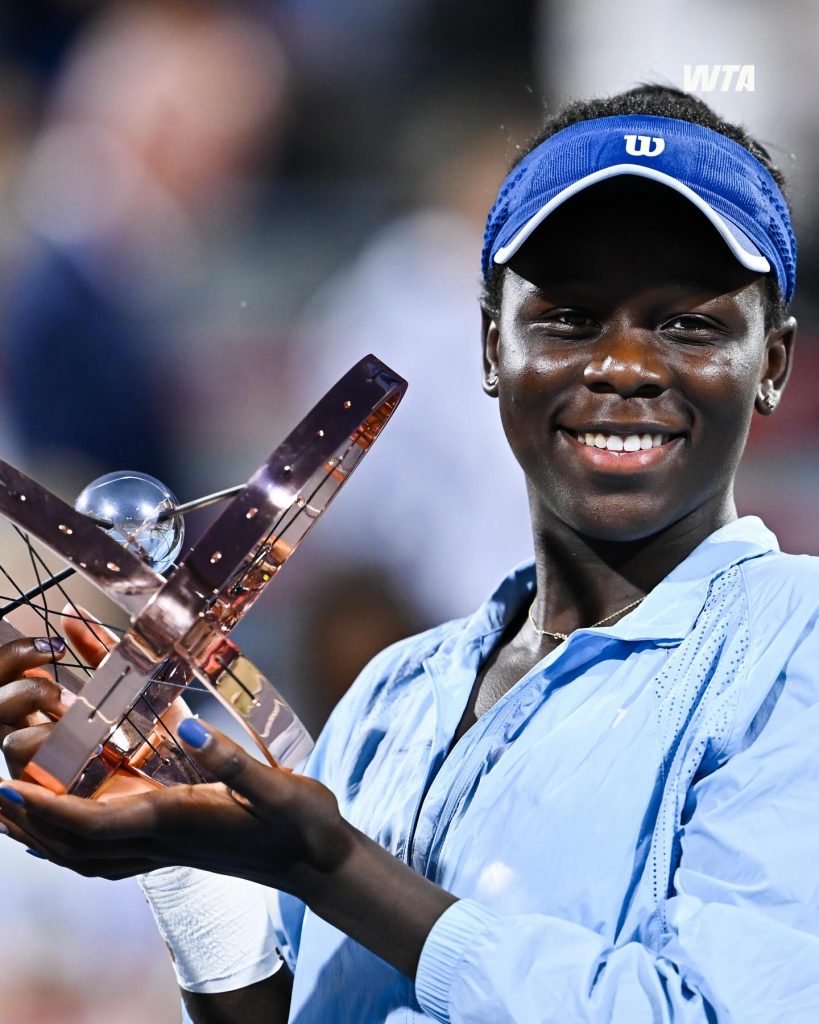
For Mboko, this is just the beginning. For Osaka, it’s another step back toward the summit. And for all of us who witnessed it, it’s a reminder of why we tune in, hoping to catch lightning in a bottle on any given Thursday night.