
ESPN’s ACC Extension: A Critical Step in Stabilizing College Sports or Just a Temporary Fix?
ESPN’s decision to exercise its option and extend its partnership with the Atlantic Coast Conference (ACC) through 2036 marks a significant moment in college sports. With the February 1 deadline looming, ESPN chose to renew the deal that helped launch the ACC Network in 2016, offering the conference a much-needed financial lifeline. Yet, while the decision provides some stability, it also underscores the growing tensions between the ACC’s biggest programs—Clemson and Florida State—and the conference’s long-term viability.
A Changing Landscape for the ACC
When the ACC Network deal was first struck, the future looked promising, and the ACC hoped to position itself as a serious contender in the rapidly changing world of college athletics. However, years of underperformance in comparison to its wealthier competitors, the Big Ten and SEC, have highlighted a growing financial divide. The ACC’s media rights deal, which brings in roughly half of what the Big Ten and SEC command from their TV contracts, has led to mounting dissatisfaction among its most high-profile schools. For Clemson and Florida State, whose success on the field generates enormous media value, the stakes are higher than ever.
Clemson and Florida State’s Battle for Fairness
At the heart of the ACC’s ongoing negotiations is a complex dispute over how the league distributes its media revenue. Sources familiar with the talks reveal that ESPN’s decision to extend its deal is linked to Clemson and Florida State’s push for a new revenue-sharing model. This model would allocate a portion of the conference’s TV revenue to schools based on their individual contributions, rewarding programs that generate the most viewership and revenue, such as Clemson, Florida State, North Carolina, and Miami.
Florida State, in particular, has long been vocal about its dissatisfaction with the current distribution system. Last year, FSU athletic director Michael Alford argued that Florida State, which contributes approximately 15% of the conference’s TV rights value, receives only 7% of the payout. This growing financial disparity, along with the increasing wealth of rival conferences, has led to a push for more equitable distribution.
The “Brand Fund”: A Potential Solution?
The ACC’s proposed solution to these revenue concerns is a “brand fund,” a new model that would allocate a percentage of the ACC’s media revenue to schools that generate the most revenue in football and basketball. This move aims to incentivize top programs like Clemson and Florida State to stay, potentially stabilizing the conference’s future.
However, Clemson and Florida State have filed lawsuits seeking to renegotiate their media rights deals or, in the worst-case scenario, find a way out of the conference. Although neither school has formally declared its intention to leave, their legal actions and frustrations highlight the financial pressures that could lead to a realignment, especially given the looming expiration of TV contracts for other major conferences after 2031.
The Lawsuits: Settlement or Stalemate?
The extension of the ESPN deal is directly tied to the ongoing lawsuits filed by Clemson and Florida State, which have sought to challenge the ACC’s restrictive grant-of-rights agreement. These schools are reportedly looking for a settlement that would involve reduced penalties for exiting the conference after 2031, when the media deals of the Big Ten, SEC, and Big 12 will expire. If the ACC and ESPN can agree on a new revenue distribution model that satisfies the two programs, it could lead to a settlement and allow the schools to drop their lawsuits.
However, the financial disparity between the ACC and its competitors will remain a key issue. Even with new revenue models, Clemson and Florida State could still see the SEC and Big Ten as more lucrative long-term options.
Notre Dame: A Key Piece in the Puzzle
As part of the broader negotiations, Notre Dame plays a pivotal role. Although the Irish are independent in football, they compete in the ACC for every other sport. Sources suggest that increasing the number of high-profile games between Notre Dame and top ACC football programs could provide significant revenue boosts for the league. Notre Dame’s athletic director, Pete Bevacqua, has expressed a willingness to schedule more marquee matchups with teams like Clemson, potentially enhancing the ACC’s value and increasing TV viewership.
But questions remain about whether Notre Dame’s cooperation will be enough to help the ACC close the financial gap with the Big Ten and SEC. The Irish’s financial arrangements with NBC, while lucrative, may not align perfectly with the ACC’s goals, creating tension in the relationship.
The “Value Adds”: ESPN’s Plan to Enhance the Deal
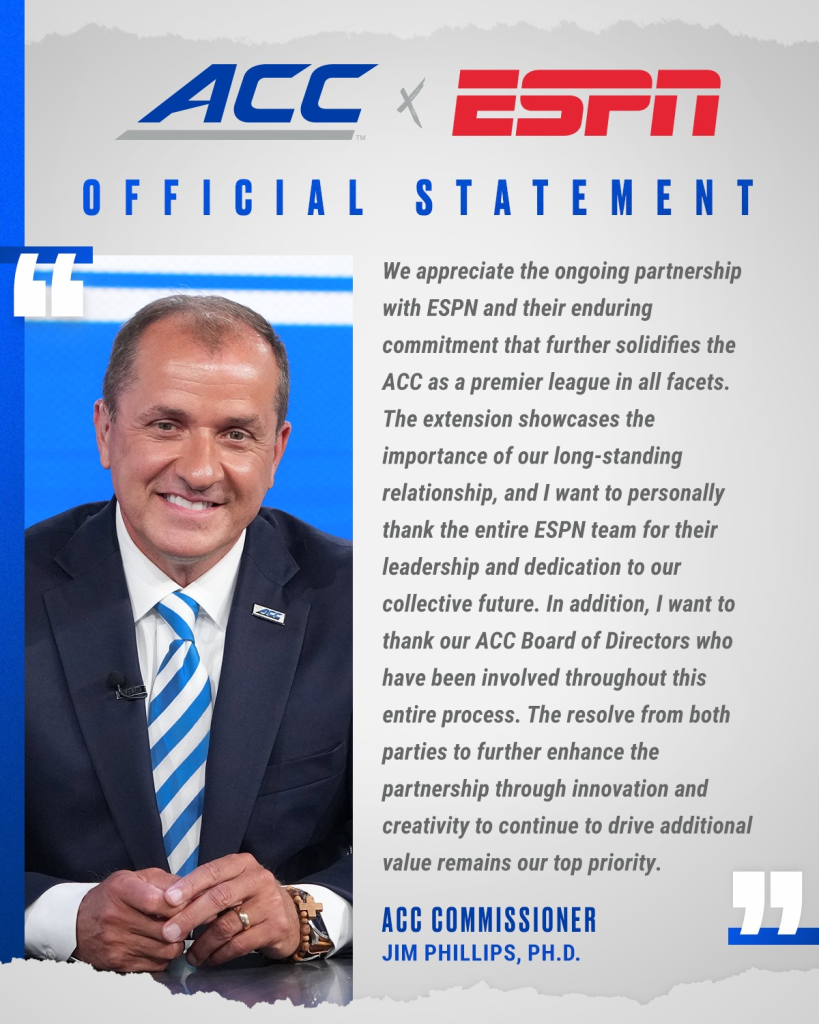
In an effort to increase the appeal of the ACC Network and maximize content across ESPN platforms, ACC Commissioner Jim Phillips has worked to secure “value adds” from ESPN. These could include more high-profile football and basketball matchups, with an emphasis on games between marquee ACC teams and Notre Dame. This strategy could help enhance the conference’s exposure, but it remains to be seen whether these moves will significantly boost the ACC’s bottom line.
The Bigger Picture: Is the ACC in Trouble?
The ACC’s financial struggles go beyond mere inconvenience—they represent a serious threat to the league’s survival. With the Big Ten and SEC continuing to expand, and their TV contracts bringing in billions, the ACC’s smaller revenue pool places its programs at a growing disadvantage. The financial gap is evident in recruiting, where schools with bigger budgets can outspend the ACC’s top programs.
While ESPN’s renewal of the ACC deal offers some immediate stability, the question remains whether it will be enough to keep top programs like Clemson and Florida State satisfied. As college sports continues to evolve, the ACC risks falling further behind its more affluent peers.
The collapse of the Pac-12 has highlighted how quickly a conference can disintegrate, and the impact on schools like Oregon State and Washington State has made many ACC administrators nervous about the league’s future. Even with the extension in place, the ACC’s long-term prospects depend on how well it can address these growing financial concerns and retain its most valuable programs.
A “Look-In” Clause: A Nod to Future Uncertainty
As part of the renewed contract, ESPN has included a “look-in” clause that allows the College Football Playoff (CFP) to adjust payouts in 2028, depending on performance or another round of conference realignment. This clause shows foresight in addressing potential future changes in college sports, particularly as the sport continues to grapple with major shifts in its media rights landscape. Yet the CFP’s new media deal, which will pay approximately $1.3 billion annually from 2026 to 2031, predominantly benefits the Big Ten and SEC, further complicating the ACC’s financial challenges.
Conclusion: The ACC’s Defining Moment
The next few months will be crucial for the ACC as it works to finalize its new revenue distribution model. ESPN’s extension provides a temporary cushion, but it’s unclear whether it will be enough to stem the tide of dissatisfaction from top programs like Clemson and Florida State. If the ACC can’t close the financial gap with the Big Ten and SEC, it may face an irreversible fracture, with its top schools seeking greener pastures in wealthier conferences.
The outcome of these negotiations could ultimately reshape the future of college sports. The ACC must decide whether it can adapt to the evolving landscape of college athletics, or whether it will continue to be overshadowed by its more lucrative competitors. With Clemson and Florida State’s futures still up in the air, this is a turning point for the conference—and for college sports as a whole.