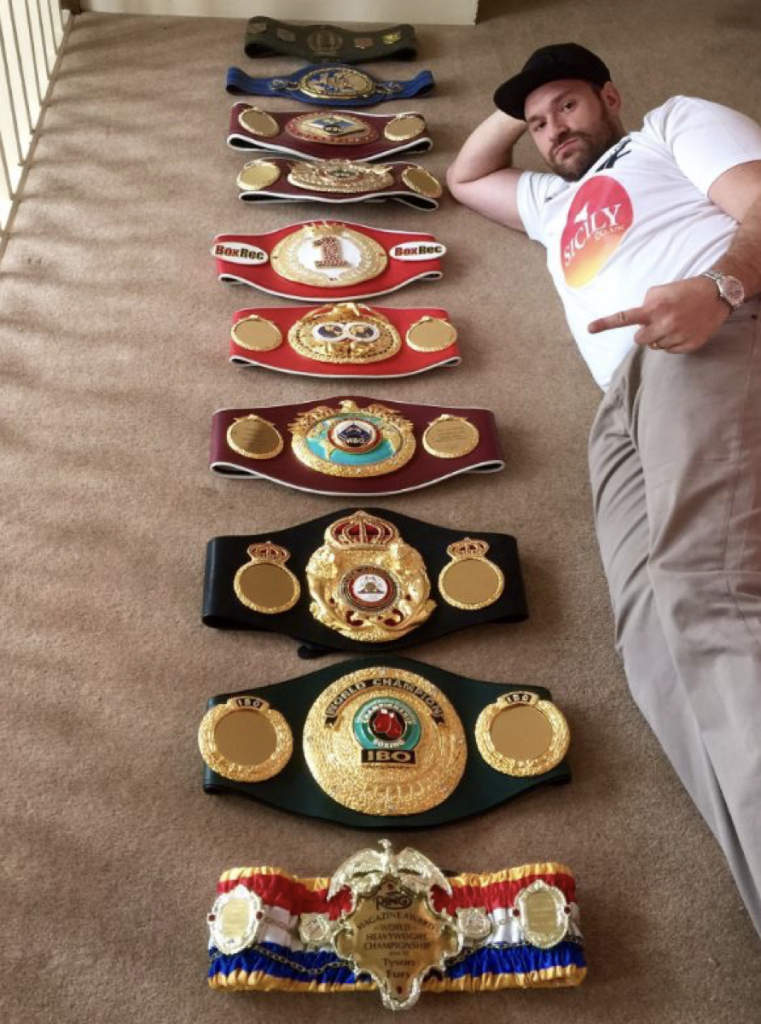
Tyson Fury, the self-proclaimed “Gypsy King,” has left an indelible mark on the world of boxing. On January 13, 2025, the heavyweight champion stunned the sporting world with his sudden retirement announcement on Instagram, closing the curtain on a career that redefined the heavyweight division in the 21st century. But as Fury walks away from the ring, the legacy he leaves behind is as complex as it is awe-inspiring.
A Champion Born of Boxing Tradition
Fury’s story begins long before his professional debut in 2008. Born on August 12, 1988, into a family steeped in boxing tradition and Gypsy heritage, he was practically destined for the spotlight. His name, a tribute to the great Mike Tyson, was a prophetic nod to what was to come. The young Fury quickly developed into a fighter of rare talent and charisma, blending a size and reach that made him nearly impossible to outmaneuver with a boxing IQ that belied his unorthodox style.
His rapid ascent through the ranks was punctuated by a number of early victories, with Fury claiming the British heavyweight title in just four years—a remarkable feat for any fighter. But it was his unexpected rise to the top of the sport that catapulted him into global stardom, and his 2015 win over Wladimir Klitschko—one of the most dominant champions in the history of the heavyweight division—cemented Fury’s place as a boxing legend.
The Fight That Defined a Legacy: Fury vs. Klitschko
Fury’s win over Klitschko in November 2015 wasn’t just a victory; it was a statement. In a fight that left boxing fans and analysts in awe, Fury took on the 10-year reigning champion in his own backyard, dominating the fight with a mix of movement, defensive brilliance, and an unpredictable, almost irreverent style. This win earned Fury the WBA, IBF, and WBO world titles, marking him as the new face of the heavyweight division. But the victory also laid the groundwork for what would become one of the most tumultuous chapters of Fury’s career.
The Darkest Days: Struggles with Mental Health and Addiction
Fury’s time at the top was short-lived. Just months after his historic win, Fury fell into a downward spiral marked by depression, substance abuse, and weight gain. The fighter who had once danced in the ring like a light heavyweight was now a shell of his former self, both mentally and physically. Fury’s struggles, which included suicidal thoughts, were deeply personal—and publicly raw. To many, it seemed as though the Gypsy King had lost his battle against the demons that raged inside him.
But Fury’s return to the sport was nothing short of miraculous. After over two years away from the ring, he embarked on a journey of redemption—physically, mentally, and emotionally—that culminated in one of the greatest comebacks in boxing history.
The Wilder Trilogy: Defining a New Era of Heavyweight Boxing
The real turning point of Fury’s comeback came with his highly anticipated trilogy against Deontay Wilder, a rivalry that elevated both men to legendary status in the annals of boxing. Their first encounter in 2018 was one for the ages. In a fight that saw Fury knocked down twice, including a stunning 12th-round knockdown, Fury somehow rose from the canvas to secure a controversial draw. That fight would become the stuff of boxing folklore, with many pundits calling it one of the greatest heavyweight contests of the modern era.
But it was the rematch in 2020 that truly defined Fury’s legacy. This was not just a return to form—it was an absolute dismantling of Wilder. Fury dominated from start to finish, stopping Wilder in the seventh round to claim the WBC heavyweight title and solidifying his position as the best heavyweight of his generation. The third and final fight in 2021, which ended with another TKO win for Fury, was an exclamation point on a trilogy that will go down in history as one of the greatest rivalries in boxing.
The Art of Self-Promotion and Mental Health Advocacy
What made Fury different from his contemporaries was not just his size, skill, or bravado—it was his ability to make boxing personal. He broke down barriers in the sport, not only with his unorthodox style in the ring but also with his openness about his struggles with mental health. In an era where athletes often feel the pressure to maintain an image of invincibility, Fury’s candid discussions about his battles with depression, bipolar disorder, and addiction have been a breath of fresh air. He has used his platform to advocate for mental health awareness, helping to destigmatize these issues within the sports world and beyond.
Fury’s outspokenness made him a polarizing figure at times, but his honesty also won him legions of fans who saw him as a fighter not just in the ring, but in life. Whether he was singing in the ring or trash-talking with his opponents, Fury’s larger-than-life personality turned him into a global icon, one who transcended the sport of boxing.
A Record for the Ages
With a career record of 34 wins, 1 loss, and 1 draw (24 knockouts), Tyson Fury retires as one of the most accomplished heavyweights of all time. He captured multiple world titles, including the unified heavyweight championships in 2015–2016, the Ring magazine title twice (2015, 2022), and the WBC title from 2020 until his retirement. Few boxers in history have matched his combination of size, skill, and heart, and his legacy will surely be a topic of conversation for generations to come.
In terms of pure boxing ability, his footwork for a 6’9″ man, his ability to switch between orthodox and southpaw stances, and his resilience in the face of adversity are second to none. To those who have shared a ring with him, Fury’s ability to dictate the pace of a fight, paired with his mental fortitude, made him a nightmare for anyone in the division.
Boxing Peers’ Reflections: A Career That Shaped the Heavyweight Landscape
From the perspective of boxing peers, Fury’s legacy is equally impactful. His series of battles with Deontay Wilder altered the heavyweight landscape, creating a new era of rivalry that sparked interest in the division at a time when many thought it had grown stale. His ring generalship, combined with a unique ability to adapt under pressure, was a testament to his versatility. Trainers, fighters, and analysts all agree that Fury was one of the few fighters in history capable of making a fighter as dangerous as Wilder look ordinary, not by out-punching him, but by out-thinking him.
Moreover, his willingness to take on challenges others would avoid—from his first fight with Klitschko to the two-year layoff and return to the ring—has earned him the respect of even the most cynical figures in boxing. Few fighters of his era can claim such a blend of unpredictability, resilience, and skill.
The Gypsy King’s Final Chapter
As Tyson Fury exits the sport, there will undoubtedly be debates about where he ranks in the pantheon of all-time greats. Is he a top-10 heavyweight? A top-5? Regardless of where he lands in these rankings, one thing is clear: his story will forever be intertwined with the narrative of modern heavyweight boxing. Fury’s combination of natural talent, mental toughness, and willingness to confront the hardest aspects of his life has made him one of the most fascinating figures in the history of the sport.
Though his retirement may seem sudden to some, those who know the Gypsy King’s journey understand that it was never just about the fights—it was about the fight to be the best, to be himself, and to conquer more than just the ring. Tyson Fury’s legacy is a reminder of boxing’s ability to elevate its champions to global stature, but also to humble them in ways that make their victories even sweeter.
Fury leaves behind a trail of broken records, epic battles, and an inspiring tale of redemption. As he steps away from the sport, one thing is for certain: boxing will not soon forget the reign of the Gypsy King.
There was one other thing…before he concluded his retirement message, he ended with a mystery of sorts. Tyson Fury cryptically remarked, “Dick Turpin wore a mask,” a deliberate play on the legendary highwayman’s infamous persona, blending historical reference with Fury’s own career narrative. Like Turpin, who wore a mask to obscure his true intentions and escape justice, Fury has long operated under a public persona that masks his deeper struggles and complexities. His career has been defined by defying expectations, both in the ring and in his personal life, with his flamboyant character often concealing the mental health battles and personal demons he’s fought behind the scenes. The statement underscores Fury’s ability to craft a narrative that’s as unpredictable as his boxing style, leaving fans and critics to interpret his actions and words in their own ways.
At its core, the quote signifies a final act of defiance and mystery. Fury, much like Turpin, has thrived on being an enigma, challenging conventions and crafting his own legend. His unexpected retirement, coupled with this cryptic farewell, is yet another chapter in a career full of surprises. It leaves open the possibility that, like Turpin’s mask, there’s more to Fury’s story than meets the eye—a further plot twist or return that keeps his legacy as a larger-than-life figure intact. In the end, the Gypsy King’s departure from the ring is not just the end of a career but a continuation of the mystique he’s carefully built over the years.