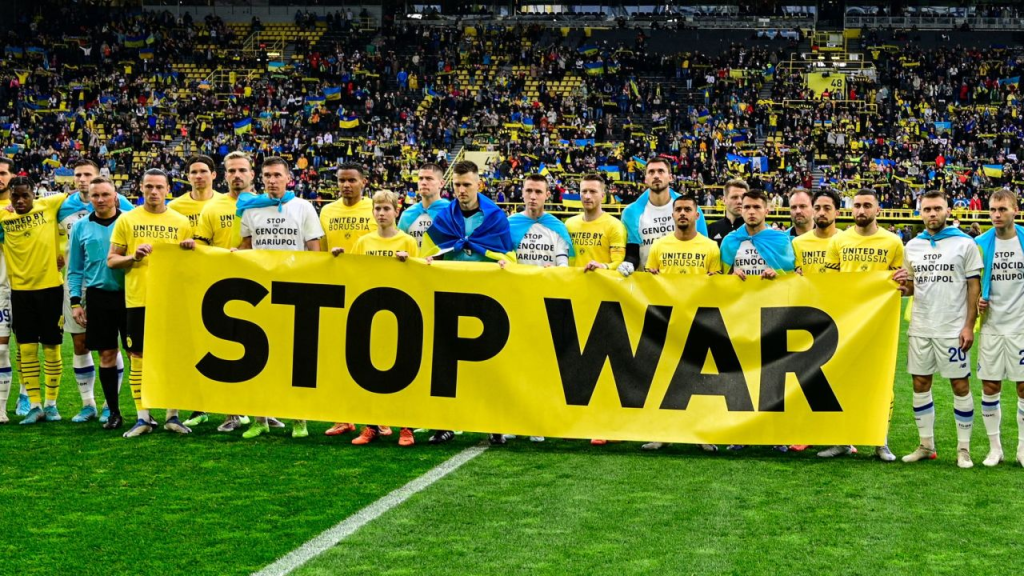
When World Events Intervene: Sports in the Shadow of War
The playing field has never been truly insulated from geopolitical reality, but the recent U.S.-Israel-Iran military escalation has transformed routine sports logistics into a high-stakes reckoning with risk, responsibility, and human cost.
Stranded: The Human Toll of Closed Skies
For elite athletes, the sudden closure of a major transit hub is far more than an inconvenience — it fractures the precise mental and physical rhythm that world-class performance demands.
Tennis in Limbo. Fresh off his title at the Dubai Duty Free Championships, former world No. 1 Daniil Medvedev found himself grounded alongside his wife and children as retaliatory strikes shut down all outbound flights. His participation in the BNP Paribas Open at Indian Wells is now uncertain — though as the crisis deepens, tournament schedules feel increasingly secondary. Andrey Rublev, Mirra Andreeva, and doubles champions Harri Heliövaara and Henry Patten remain stranded in the same holding pattern.
Badminton Stalled. Indian star P.V. Sindhu and her coaching staff were forced to shelter inside Dubai International Airport mid-journey to the All England Open — a jarring illustration of how quickly a transit lounge becomes a refuge in a geopolitical crossfire.
Racing Against the Clock: F1 and IndyCar
Motorsport, defined by the precise global movement of personnel and equipment, has been dealt a severe logistical blow.
Formula 1 is managing what insiders describe as a massive “puzzle.” More than 1,000 personnel — including engineers from Mercedes and McLaren and staff from tire supplier Pirelli — scrambled to rebook travel ahead of the season-opening Australian Grand Prix. A critical wet-weather tire test in Bahrain was canceled on security grounds, leaving roughly 120 staff members searching for an exit from Manama. The cancellation is a direct operational setback heading into the new season.
IndyCar and Regional Exposure. Though Australian GP cars were already on-site, the broader circuit’s dependence on Middle Eastern hubs has prompted teams across multiple series to reassess the viability of April rounds in Bahrain and Saudi Arabia.
Status Report: Athletes and Organizations in Limbo
The following table summarizes the current status of various high-profile athletes and organizations affected by the crisis:
| Sport | Entity/Athlete | Current Status | Location/Impact |
| Tennis | Daniil Medvedev | Safe but stranded | Stuck in Dubai; reposted social media updates from a friend’s apartment. |
| Badminton | P.V. Sindhu | Withdrawing from tournament | Stuck in Dubai; expected to miss the All England Open starting March 3. |
| Cricket | Mushfiqur Rahim | Stranded mid-transit | Flight from Jeddah to Dubai forced to return to Jeddah; stuck at the airport. |
| Cricket | ICC / T20 Personnel | Rerouting | Logistics teams activated to move staff out of Doha and Dubai hubs. |
| Motorsport | Mercedes McLaren | Scrambling for flights | Roughly 100 staff members searching for “exit strategies” from Bahrain. |
| Basketball | Destiny Littleton | Shelter-in-place | Currently in Jerusalem; documenting the experience of hearing nearby strikes. |
Moral Responsibility: Players Left Behind
In crisis, the relationship between organizations and athletes must evolve from professional to protective.
University of South Carolina coach Dawn Staley has been publicly noting her University’s coordination attempts, try to assist with the evacuation of three former Gamecocks playing professionally in Israel: Tiffany Mitchell, Destiny Littleton, and Mikiah Herbert Harrigan.
“We are working on a plan to get home. Let us pray for our loved ones to return home safely asap!” — Dawn Staley
Littleton, based in Jerusalem, has posted harrowing updates from bomb shelters — sirens, overhead drones, and the relentless cycle of waiting for the next alert. The psychological weight of that experience will not simply disappear when she boards a flight home.
Her situation illuminates a systemic inequity: because WNBA salaries have historically lagged far behind those of male counterparts, many women’s players have been compelled to compete in volatile regions during the off-season simply to earn a sustainable income — accepting greater personal risk as a condition of their profession.
Rethinking the “Duty of Care”
This crisis has forced a hard institutional reckoning. The risk is no longer theoretical. As the line between arena and conflict zone blurs, governing bodies from the Badminton World Federation to the ICC are now operating with the caution of diplomatic entities. Experts are calling for four concrete reforms:
- Mandatory Evacuation Protocols — Pre-negotiated exit strategies embedded in every professional contract for athletes in high-risk regions.
- Real-Time Intelligence Sharing — Direct communication channels linking sports leagues, local security experts, and foreign ministries.
- Specialized Geopolitical Insurance — Coverage designed for the sudden, conflict-driven cancellation of marquee events.
- Calendar Flexibility — A structural rethink of global scheduling to reduce over-dependence on a handful of volatile transit hubs like Dubai and Doha.
2026 World Cup: The Largest Shadow
The longest-range consequences may fall on the 2026 FIFA World Cup, where the United States is a primary co-host — now also a party to the conflict.
Iran’s Potential Withdrawal. Iranian Football Federation President Mehdi Taj has indicated that competing in a tournament hosted by a combatant nation may be “impossible.” Iran is drawn in Group G, with matches scheduled for Los Angeles and Seattle.
FIFA’s Response. Secretary General Mattias Grafström has stated the organization is “monitoring developments” while maintaining the goal of a safe, fully participated tournament. Behind the scenes, contingency plans reportedly include replacing Iran with Iraq or the UAE should a boycott or visa blockade materialize.
The Individual Before the Spectacle
“The show must go on” is sports’ oldest mantra. The current crisis proves it was never a guarantee. Even the world’s most celebrated athletes are, at their core, civilians — and no logistical strategy can fully account for the speed at which an active conflict escalates.
The industry is absorbing an overdue lesson: the safety of the individual must always take precedence over the spectacle of the game. Because when missiles fly, all certainty stops. Flights are grounded. And the world’s greatest athletes, national representatives and global icons, are no longer competitors. Suddenly, they’re just people trying to survive, find each other, and get home.