
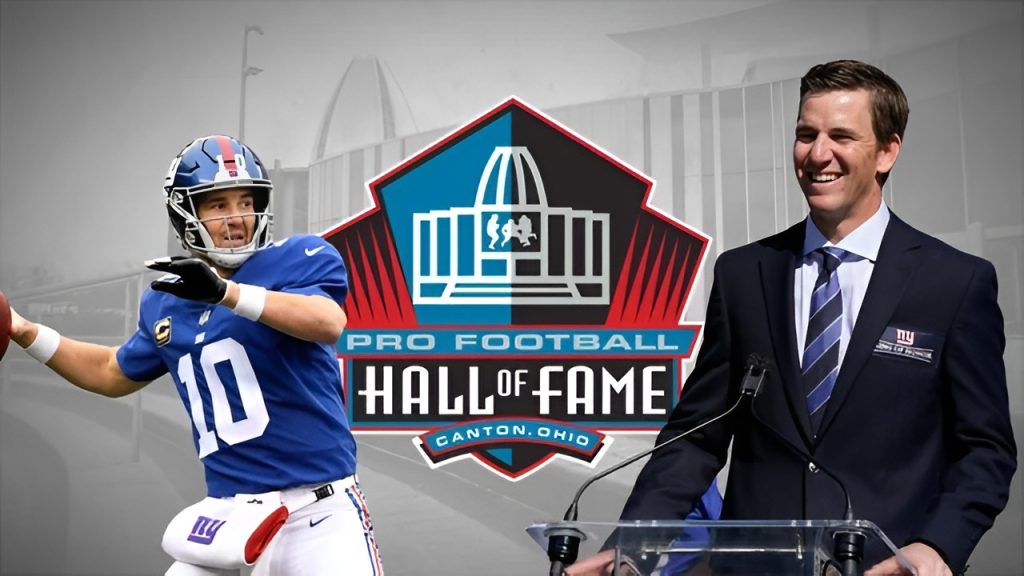
The Dilemma: 𝒜 𝓂ℴ𝓂ℯ𝓃𝓉 𝓉ℴℴ 𝓈ℴℴ𝓃.
Eli Manning’s Hall of Fame candidacy represents one of the most compelling community debates in modern football. It’s a case study where unremarkable regular-season production metrics clash with playoff excellence and moments that defied logic.
Reportedly falling short of the required 80 percent threshold in his second year of eligibility for the Class of 2026, Manning’s resume occupies a fascinating middle ground. The balance sheet shows undeniable assets: two Super Bowl MVP awards, two of the most iconic postseason upsets in NFL history (both against Tom Brady’s dynasty-era Patriots), an ironman streak of 210 consecutive starts, and top-10 all-time rankings in passing yards (57,023) and touchdowns (366). These aren’t footnotes. They’re franchise-defining achievements.
Yet the analytics tell a different story. A perfectly symmetrical 117–117 regular-season record suggests mediocrity over the long haul. His EPA per play numbers place him outside the elite tier, trailing even contemporaries like Derek Carr, a comparison that stings for those championing his Canton credentials. When measured against inner-circle quarterbacks like his brother Peyton or Joe Montana, Eli rarely sustained the same year-over-year dominance that separates the Hall of Very Good from Greatness.
The logjam ahead of him compounds the issue. Pundits debate whether Manning deserves entry before names like Jim Plunkett (similar playoff heroics), Drew Brees and Philip Rivers (superior statistics), Ben Roethlisberger (more wins, comparable postseason success), Donovan McNabb (more conference championship appearances, better win percentage), or even forgotten-era talents like Ken Anderson and Ken Stabler, whose efficiency numbers actually aged better than expected.
But here’s where Manning’s case becomes intriguing from both a strategic and historical perspective: he may ultimately mirror Joe Namath’s trajectory. Namath’s enshrinement wasn’t about statistical supremacy, it was about cultural impact, durability, volume production, and moments that fundamentally altered the league’s narrative arc. Sound familiar?
Manning delivered when the lights burned brightest, toppling the greatest dynasty of his generation—not once, but twice. That’s the kind of clutch gene that shapes legacies and moves merchandise, the ineffable stuff that makes us stroke our beards and debate the game’s situational meaning. In a league increasingly ruled by data, Manning’s case challenges voters to reckon with a truth that doesn’t fit neatly on a checklist: some contributions don’t lend themselves to easy measurement.
The verdict may take another cycle or two, but the smart money says Canton eventually calls his name. Not because the metrics demand it, but because the moments do.