
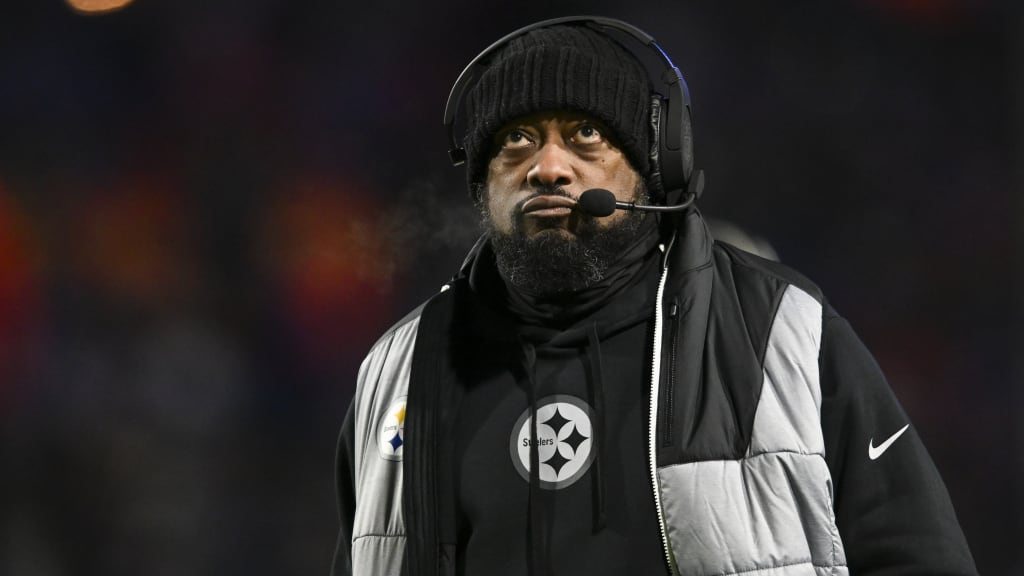
How a Coach and an Organization Showed the NFL What Class Truly Looks Like
In an age when professional sports coaches are often fired via press release, dismissed through intermediaries, or unceremoniously shown the door after a single disappointing season, what transpired Tuesday in Pittsburgh was something profoundly different. Mike Tomlin, after 19 remarkable years leading the Steelers, chose to step down on his own terms. And in doing so, he and team president Art Rooney II reminded us all that dignity, respect, and mutual appreciation can still exist in professional football’s high-stakes environment.
The announcement came less than 24 hours after a crushing playoff defeat, a loss that would have justified anger, recrimination, or the kind of organizational finger-pointing that has become all too common in modern sports. Instead, what emerged were two statements that read more like love letters to a shared journey than the typical corporate parsing of words that accompanies a coaching change.
A Standard That May Never Be Matched
The numbers tell part of Tomlin’s story: 193 regular-season wins, tied with legendary coach Chuck Noll for the most in franchise history. He captured a Super Bowl championship in just his second season, becoming the youngest head coach in NFL history to win it all at age 36. He made the playoffs 13 times and secured eight division titles. But the statistic that may stand forever is this: Tomlin never had a losing season in 19 years, an accomplishment that will likely never be duplicated.
Think about that for a moment. Nineteen consecutive non-losing seasons in the NFL, where parity is designed into the system, where salary caps limit dynasty building, where injuries can derail the most carefully constructed roster in a single afternoon. Through quarterback transitions, defensive overhauls, ownership changes, and a global pandemic, Tomlin kept the Steelers competitive every single year.
Yes, the playoff struggles were real. The team hadn’t won a playoff game since the end of the 2016 season, and Monday night’s loss marked the seventh consecutive postseason defeat. There were frustrating moments this season, including home fans chanting for his removal during difficult stretches. The criticism was loud, at times unfair, and often overlooked the remarkable consistency he maintained.
But here’s what made Tuesday’s announcement so powerful: both Tomlin and Rooney acknowledged reality without bitterness, celebrated achievement without arrogance, and faced the future without recrimination.
Words That Resonated With Grace
Tomlin’s statement struck every right note. He thanked the Rooney family for their trust and support. He expressed gratitude to players who gave everything and to coaches and staff who made the journey meaningful. And then he addressed Steelers Nation directly, acknowledging what makes Pittsburgh different from every other NFL franchise.
“Your passion, loyalty, and high expectations represent what makes this franchise truly special,” Tomlin said. “Coaching in Pittsburgh is unlike anywhere else, and I will always take great pride in having been a steward of this team.”
The word choice matters. Steward. Not owner, not conqueror, but steward—someone entrusted with caring for something precious, something that existed before him and will continue after. It’s a word that speaks to humility and responsibility, to understanding one’s place in a lineage that includes Chuck Noll’s four Super Bowl rings and Bill Cowher’s decade and a half of excellence.
“While this chapter comes to a close, my respect and love for the Pittsburgh Steelers will never change,” he continued. There was no finger-pointing, no excuses, no attempt to spin the narrative in his favor. Just honest reflection and genuine appreciation.
Rooney’s Response Spoke Volumes
Art Rooney II’s statement was equally powerful, expressing how hard it was to put into words his respect and appreciation for Tomlin. He noted the Super Bowl championship, the playoff appearances, the division titles. But he also went further, acknowledging something more fundamental.
Rooney stated that Tomlin’s track record of never having a losing season in 19 years will likely never be duplicated. This wasn’t just politeness or perfunctory praise. This was a team president recognizing the historical significance of what had been accomplished, even as both parties acknowledged it was time for change.
“My family and I, and everyone connected to Steelers management, are forever grateful for the passion and dedication Mike Tomlin has devoted to Steelers football,” Rooney said. The language was personal, familial, acknowledging a relationship that transcended the typical employer-employee dynamic that defines most coaching arrangements in professional sports.
What This Moment Represents
In Pittsburgh, the Steelers will now search for just their fourth head coach since 1969. Chuck Noll from 1969 to 1991. Bill Cowher from 1992 to 2006. Mike Tomlin from 2007 to 2025. That kind of organizational stability is virtually unprecedented in modern professional sports, and it speaks to something deeper than wins and losses.
It speaks to mutual respect. To patience. To understanding that building and sustaining excellence is a marathon, not a sprint. To recognizing that the men who lead these organizations are human beings worthy of dignity, not disposable commodities to be discarded at the first sign of struggle.
Other organizations might have fired Tomlin years ago, panicking over the playoff drought or succumbing to fan pressure. Other coaches might have left bitter, feeling unappreciated or disrespected. But that’s not how things work in Pittsburgh, and Tuesday’s mutual display of grace reminded everyone why the Steelers are considered one of the NFL’s model franchises.
The Legacy Beyond Statistics
Tight end Jonnu Smith captured something essential when he spoke to reporters Tuesday. He talked about growing up with Tomlin as the face of Steelers football, about the culture the coach built, about how he treated people in the building and cared for the organization. “He’s embodied the true meaning of a Pittsburgh Steeler,” Smith said.
That’s the legacy that will endure beyond the win totals and playoff appearances. Tomlin maintained his principles, treated people with respect, and upheld the standard of what it means to be a Steeler through nearly two decades of change and challenge. He never had a losing season, yes, but he also never lost his integrity, his composure, or his commitment to doing things the right way.
A Model for Others
In a sports landscape increasingly defined by acrimony, premature firings, and transactional relationships, what Mike Tomlin and Art Rooney II demonstrated Tuesday was something rare and beautiful: a mutual parting characterized by grace, respect, and genuine appreciation for shared history.
Tomlin will almost certainly coach again if he chooses to, and whatever franchise lands him will be fortunate indeed. The Steelers will begin their search for the next steward of their proud tradition, and that coach will inherit a culture built on the foundation Noll established, Cowher reinforced, and Tomlin maintained.
But regardless of what comes next for either party, January 13, 2026, will be remembered as the day a coach and an organization showed the rest of professional sports how things should be done. With class. With dignity. With mutual respect.
In the end, that may be Mike Tomlin’s greatest legacy in Pittsburgh—not just that he never had a losing season, but that he and the organization never lost sight of what truly matters: treating people with the respect and dignity they deserve, especially when it’s time to say goodbye.
The Standard, as Tomlin often reminded his players, is the Standard. And in his final act as Steelers head coach, Mike Tomlin upheld it one more time.
A Personal Reflection: A Message From the Owner of Packed House Sports
Some stories transcend statistics and headlines. Some connections run deeper than the game itself.
I met Mike Tomlin on a football field in college, two young men chasing dreams in different uniforms but bound by the same passion. He was playing for William & Mary, a scrappy combo wide receiver and tight end for the Tribe. I was suiting up for my beloved North Carolina Tar Heels, finally getting my shot at quarterback in that Carolina blue I’d dreamed about wearing.
Before the game, he approached me with genuine respect. “It’s real cool to see you get your shot as a QB in that UNC uniform,” he said. He was from Newport News, Virginia, and had heard about me back in high school. He understood what that HEELS uniform meant to us North Carolina and Virginia boys. It was more than fabric and numbers—it was legacy, opportunity, a team we all followed, and the weight of everyone who believed in you.
That October day, my Tar Heels won 59-36. My teammate Eric Blount, a Swiss Army knife of a player who could do it all from running back to wide receiver to special teams, lit up the scoreboard with a 76-yard punt return touchdown and a 93-yard kickoff return for another score. It was one of those games where everything clicked on offense too.
But what I remember most wasn’t the victory. It was the competitor across the field, Mike Tomlin, a good ball player from a scrappy bunch, giving everything he had for his team.
Fast forward through the years, and it was something truly special to watch that same young man standing on NFL sidelines as the head coach of the Pittsburgh Steelers for 19 extraordinary years, building a legacy that few will ever match. To see someone you competed against rise to such heights, to maintain excellence year after year in the most demanding profession in sports—that’s what makes this game beautiful.
This morning, after that remarkable 19-year run, he walked into a meeting with ownership and his team to inform them he was stepping down as their head coach. It was his decision, made on his terms, with the same class and dignity he showed that day we met on the field decades ago.


I wish him nothing but the best in whatever comes next. The NFL will be fortunate to have him if he chooses to coach again. And if he decides this chapter is complete, he walks away with his head held high, his legacy secure, and the respect of everyone who knows what it takes to compete at the highest level year after year after year.
Salute to Mike T.!
From day one on that college field to his final day in Pittsburgh, he’s always been exactly who we thought he was—A real one.