
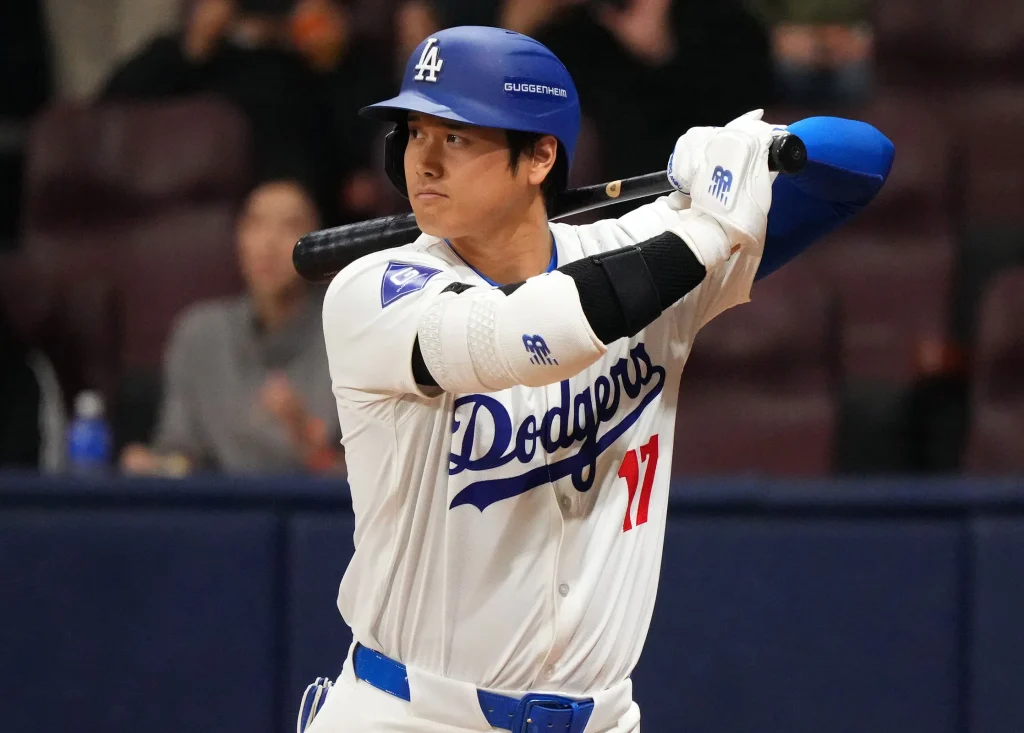
Los Angeles, October 27, 2025
There are moments in sport when we witness something beyond mere achievement—when athletic excellence becomes art, when performance transforms into poetry. Monday night at Chavez Ravine delivered precisely such a moment, and at its center stood the singular figure who has redefined what we thought possible in our national pastime.
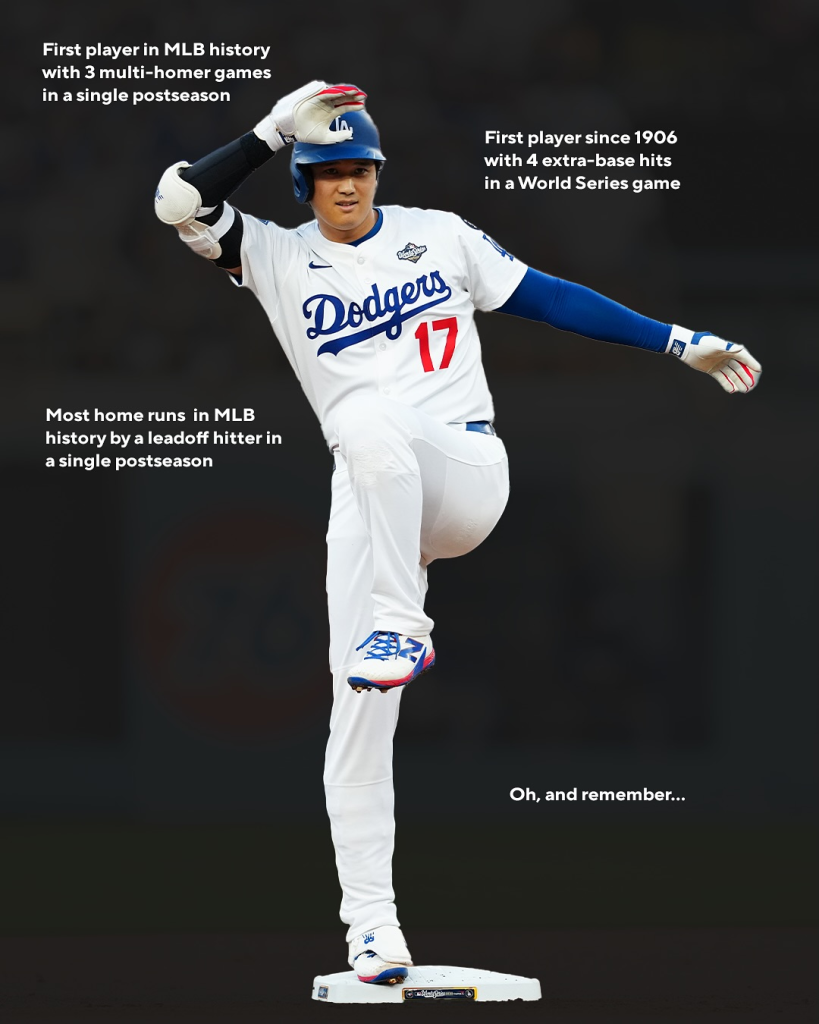
In an 18-inning World Series marathon brimming with remarkable moments and historic milestones, Shohei Ohtani carved out a performance so extraordinary that it seemed to exist in its own dimension entirely. While others made history around him, he rewrote it.
Consider the statistical cascade: Four extra-base hits through seven innings—two majestic home runs bookending a pair of doubles—matching a World Series record that had stood since the deadball era, untouched for 119 years. Then, as Toronto’s pitching staff wisely chose preservation over confrontation, five consecutive walks that brought his night’s total to an unprecedented nine times reaching base safely. No player in the modern epoch of baseball—across 83 seasons—had accomplished such a feat in any game, much less on this grandest of stages.
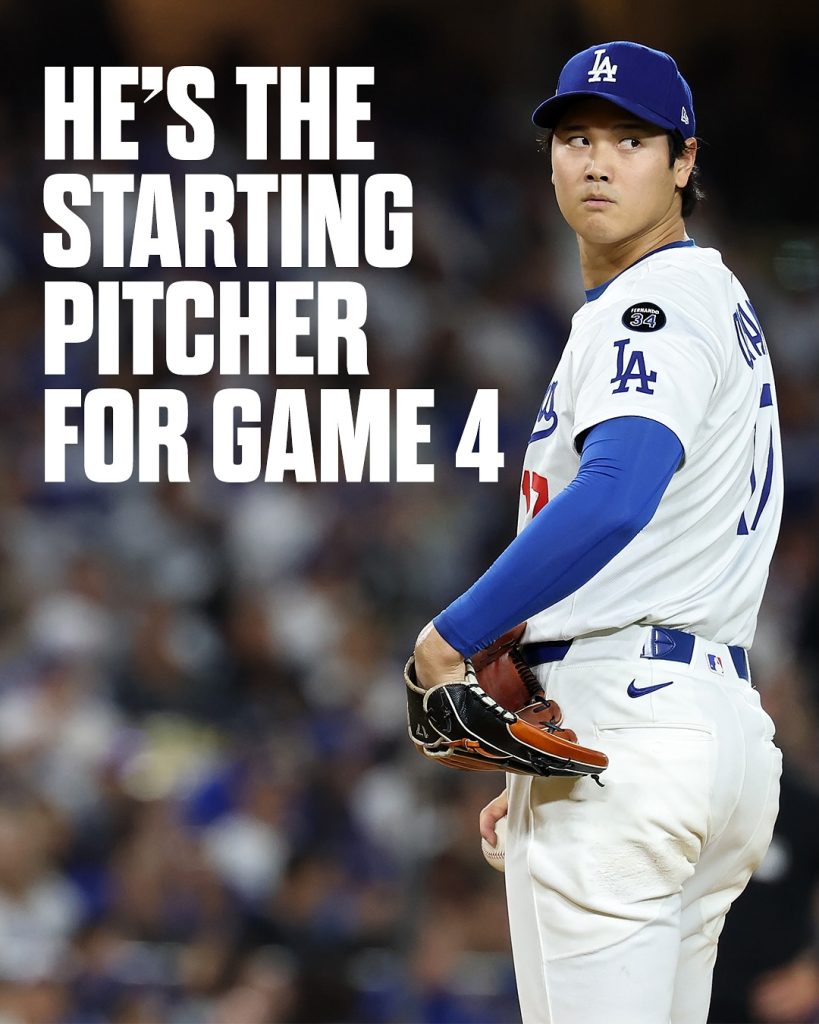
Yet the numbers, staggering as they are, tell only part of this story. Because while Ohtani was authoring this offensive symphony, the clock ticked relentlessly toward his next appointment with destiny. Game 4 awaits—less than 24 hours distant—and with it, his first World Series start as a pitcher.
“I want to go to sleep as soon as possible so I can get ready,” he said with characteristic understatement after the Dodgers’ 6-5 victory concluded with Freddie Freeman’s 18th-inning walk-off homer. The smile on his face suggested a man who understood the absurdity of what he’d just done, the impossibility of what still lay ahead.
This was, after all, merely ten days removed from his three-homer, ten-strikeout masterwork that vanquished Milwaukee and secured the National League pennant—a performance many had already crowned as the finest single-game exhibition in baseball history. Monday night’s encore now forces us to reconsider even that lofty assessment.
“I hope we don’t lose sight of the fact that our starting pitcher got on base nine times tonight,” Freeman observed, his words carrying the weight of a teammate who comprehends he’s sharing a clubhouse with greatness. “Just incredible. When you’re that hot like Shohei was tonight, walking him is the right move. You don’t want Shohei to beat you.”
Toronto manager John Schneider offered no apologies for his staff’s strategic capitulation. After Ohtani’s fourth extra-base hit, they simply conceded the battle to focus on the war. “He’s a great player,” Schneider said, “but after that, you just kind of take the bat out of his hands.”
When asked if this approach would continue throughout the remainder of the Fall Classic, his response was unequivocal: “Yeah.”
And so we arrive at the delicious paradox of Shohei Ohtani: a talent so transcendent that the opposing team’s game plan explicitly revolves around avoiding him, yet whose team still finds ways to prevail in his shadow. When Freeman’s walk-off blast finally ended the 6-hour, 39-minute epic, Ohtani sprinted onto the field before dashing toward the bullpen, where Yoshinobu Yamamoto had been warming to pitch a 19th inning despite having thrown a complete game just two days prior in Toronto. The scene captured everything about these Dodgers—the depth, the resilience, the international brotherhood.
“What matters the most is we won,” Ohtani said through his interpreter, deflecting individual glory toward collective triumph. “And what I accomplished today is in the context of this game, and what matters the most is we flip the page and play the next game.”
That next game arrives with unseemly haste—Game 4, Tuesday night, with Ohtani summoned not only as a hitter but as a hurler. Conventional wisdom suggests that Monday’s marathon might diminish his effectiveness on the mound. But conventional wisdom has never applied to Shohei Ohtani.
We are watching something that defies the boundaries we’ve long accepted as immutable in baseball. Babe Ruth’s dual brilliance belongs to sepia-toned photographs and grainy newsreels. What Ohtani is accomplishing unfolds in high definition before our eyes, and yet it feels no less mythological.
As Los Angeles prepares for Game 4, as fans who finally reached their beds in the early Tuesday hours dream of consecutive championships, one truth crystallizes: We may not see another player like this in our lifetimes. The phrase “generational talent” gets casually deployed far too often in sports discourse. Shohei Ohtani isn’t generational. He’s singular. He’s unprecedented. He’s now.
And he has a baseball game to pitch in roughly seventeen hours.
Sleep well, Shohei. Baseball’s poets will stay awake tonight, still searching for words adequate to describe what you’ve already done.