

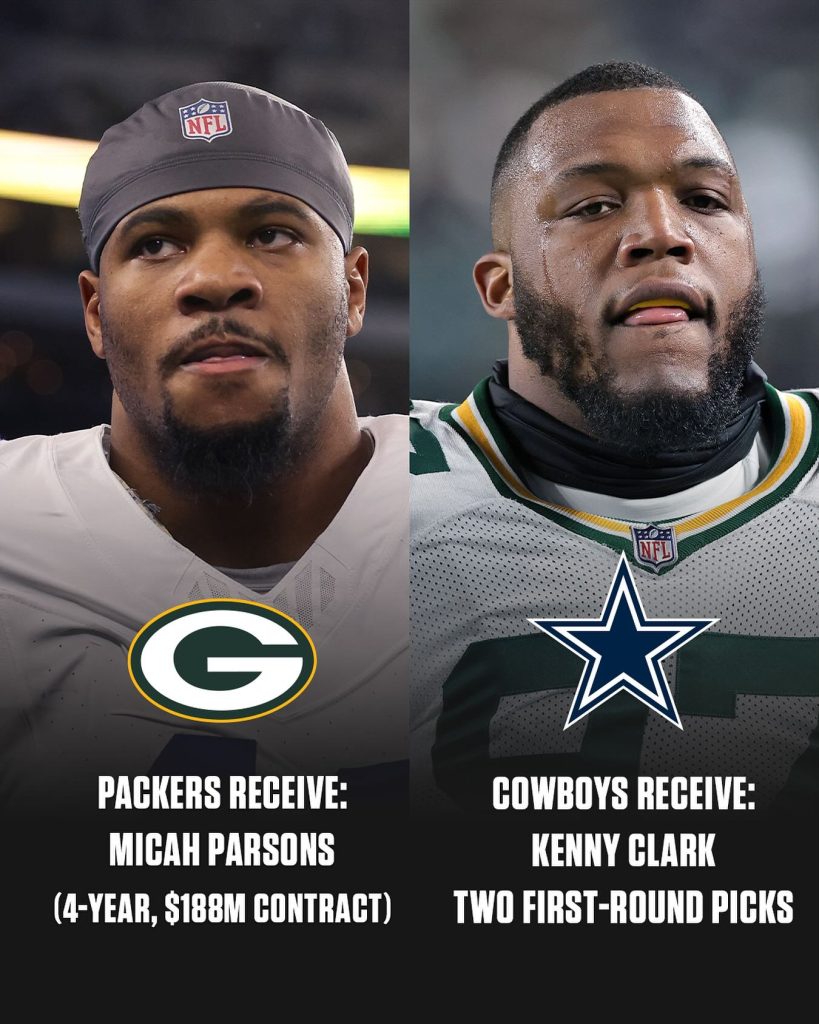
Jerry Jones set the NFL community and media outlets ablaze this week after trading away his best defensive player, Micah Parsons, from Dallas to the Green Bay Packers for Kenny Clark and two first-round picks. The fan explosion was about as you’d expect, with many intimating common sentiment: Jerry Jones’s legendary stubbornness strikes again, and Eagles and Commanders fans should send him a thank-you card for being their most valuable asset in the NFC East. Let’s examine perspectives.
From a Fan Perspective
Trading away a generational defensive talent like Micah Parsons, who had become the cornerstone of the unit, represents a significant organizational misstep that highlights persistent front office dysfunction. When a player produces elite numbers like Parsons’ 50+ sacks over four seasons and commands universal respect in the locker room, moving him for Kenny Clark and primarily future draft assets suggests a fundamental misunderstanding of championship windows and roster building. The financial aspects appear particularly puzzling given Parsons’ proven production and leadership value versus his new $188 million Green Bay contract, creating questions about whether this was truly about salary cap management or simply organizational stubbornness in negotiations that dragged on for months.
From a Front Office and Strategic Analysis
However, multiple NFL executives and analysts argue that the Parsons-for-Clark swap plus two first-round picks could represent sound long-term strategy, particularly when facing salary cap constraints and roster construction needs. Some front office veterans point out that while Parsons is undeniably elite, Kenny Clark provides proven interior defensive line production at a lower cost, and the two first-rounders allow the team to address multiple positional needs simultaneously over the next few years. Additionally, salary cap experts note that Parsons’ massive $188 million deal would have hamstrung the organization for years, and that successful franchises often prioritize accumulating premium draft capital over individual defensive stars, regardless of their talent level. The trade could ultimately be vindicated if Clark maintains solid production while the draft picks develop into multiple impact players across different positions, though the immediate competitive cost, locker room impact on teammates like CeeDee Lamb, and fan sentiment damage cannot be ignored in markets where season ticket revenue and franchise identity directly correlate with star power.