
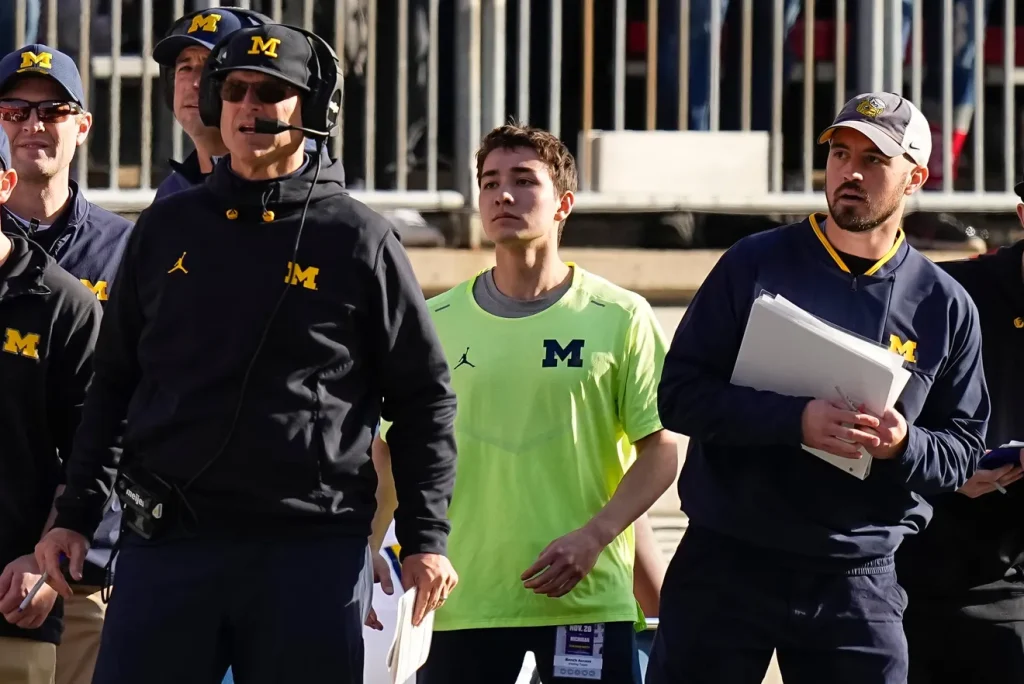
The NCAA has delivered its verdict in one of college football’s most scrutinized investigations, imposing unprecedented penalties on the University of Michigan football program that could reshape the Wolverines’ future for years to come. The sanctions, announced Friday, represent the culmination of a nearly two-year investigation into a sophisticated sign-stealing operation that rocked the college football world and cast a shadow over Michigan’s 2023 national championship season.
Record-Breaking Financial Penalties
The most staggering aspect of the NCAA’s ruling is the financial punishment—a fine that could exceed $25 million, potentially making it the largest monetary penalty in NCAA history. The massive fine includes several components that collectively create an unprecedented financial burden for the program.
The centerpiece of the penalty is the forfeiture of postseason revenue for both the 2025 and 2026 football seasons, reflecting the NCAA’s intent to hit Michigan where it hurts most financially. This is compounded by a direct $50,000 fine, a penalty equivalent to 10% of the football program’s annual budget, and additional costs equal to 10% of football scholarships for the 2025-26 academic year.
These financial sanctions demonstrate the NCAA’s commitment to imposing meaningful consequences that extend far beyond symbolic gestures. The revenue loss from two seasons of postseason competition represents millions in foregone income that would typically fund facility improvements, coaching salaries, and other program enhancements.
Operational Restrictions and Competitive Impact
Beyond the financial penalties, Michigan faces significant operational restrictions designed to limit its competitive advantages. The program will be restricted to 25% fewer official football visits during the upcoming season, hampering its ability to recruit top talent at a crucial time. Additionally, a 14-week ban on recruiting communications during the four-year probation period will further constrain the Wolverines’ recruiting efforts.
The scholarship reduction—10% of the program’s football scholarships for 2025-26—directly impacts roster construction and depth, forcing coaches to make difficult decisions about player recruitment and retention. These operational penalties create a compounding effect that extends the punishment’s impact well beyond the immediate financial blow.
Individual Consequences for Key Figures
The NCAA’s ruling includes severe individual penalties for the central figures in the scandal. Head coach Sherrone Moore will serve an additional one-game suspension in 2026, adding to the two-game self-imposed suspension he’s already serving this season against Central Michigan and Nebraska. Moore’s punishment stems from deleting a thread of text messages connected to the sign-stealing investigation, an action the NCAA viewed as obstructing its inquiry.
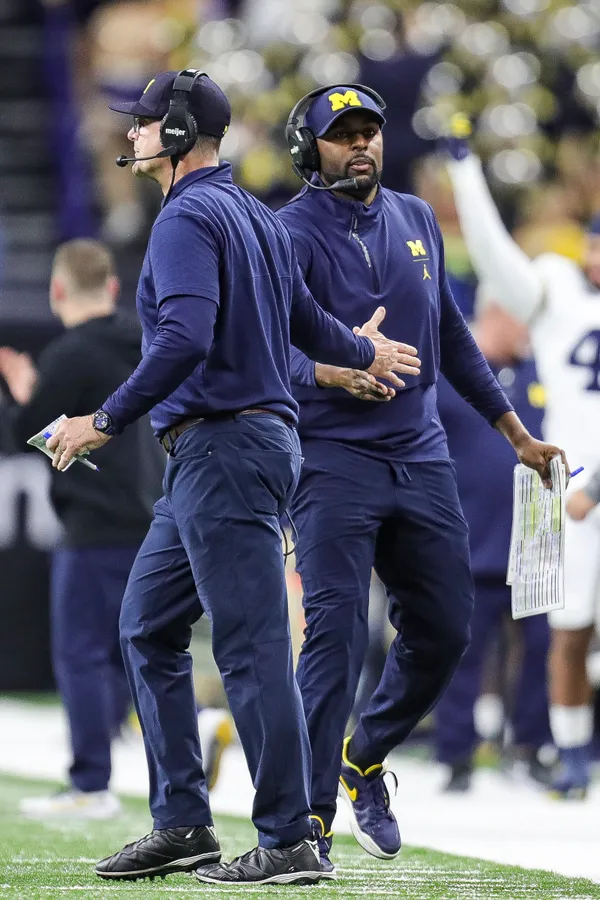
The most severe individual penalty falls on former head coach Jim Harbaugh, who faces a sweeping 10-year show-cause penalty that effectively bars him from collegiate coaching roles nationwide. This punishment, while largely symbolic given Harbaugh’s current NFL position, serves as a powerful deterrent and marks him permanently in NCAA records.
Connor Stalions, identified as the mastermind behind the sign-stealing operation, received an eight-year show-cause penalty. This punishment effectively ends any possibility of Stalions returning to college football in any coaching capacity for nearly a decade, reflecting the NCAA’s view of his central role in the scandal.
The Broader Impact on College Football
The Michigan case represents more than just punishment for one program—it sets a precedent for how the NCAA will handle sophisticated rule violations in the modern era. The scale of the financial penalties signals a shift toward more meaningful economic consequences that reflect the massive revenues at stake in contemporary college football.
The investigation revealed a systematic approach to gaining competitive advantages through advanced scouting techniques that violated NCAA rules. While Michigan maintained that much of Stalions’ operation was achieved through legal avenues, the NCAA’s ruling suggests the committee found sufficient evidence of rule violations to warrant these historic penalties.
Looking Forward: Rebuilding and Redemption
Despite the severe penalties, Michigan was spared a postseason ban and vacating wins, including from the 2023 national title season, allowing the program to maintain its championship legacy while facing the consequences of the scandal. This decision reflects a balance between punishment and recognition that the violations, while serious, may not have directly influenced game outcomes.
The four-year probation period provides a framework for Michigan to demonstrate compliance and begin rebuilding its reputation. The program must navigate significant financial and operational challenges while maintaining competitiveness in one of college football’s most demanding conferences.
For Michigan football, these penalties mark both an end and a beginning. The investigation is finally closed, providing clarity after months of uncertainty. However, the real work begins now as the program must prove it can maintain excellence while operating under unprecedented restrictions.
The Wolverines of Michigan must now operate under significant financial and recruiting restrictions while maintaining its competitive position in the Big Ten Conference. The program will face reduced scholarship allocations, limited recruiting visits, and substantial revenue losses during the four-year probation period. As part of the probationary terms, Michigan will also be subject to enhanced NCAA monitoring and compliance oversight.
Conclusion
The NCAA’s ruling on Michigan football represents a watershed moment in college sports enforcement, combining record-setting financial penalties with meaningful operational restrictions. While the Wolverines avoided the most severe potential punishments, the scope and scale of these sanctions ensure that the sign-stealing scandal’s impact will be felt for years to come.
As Michigan football moves forward under these constraints, the program’s response will serve as a case study in crisis management and institutional resilience. The penalties close one of college football’s most high-profile investigations while opening a new chapter that will test everything the Wolverines have built over decades of success.