
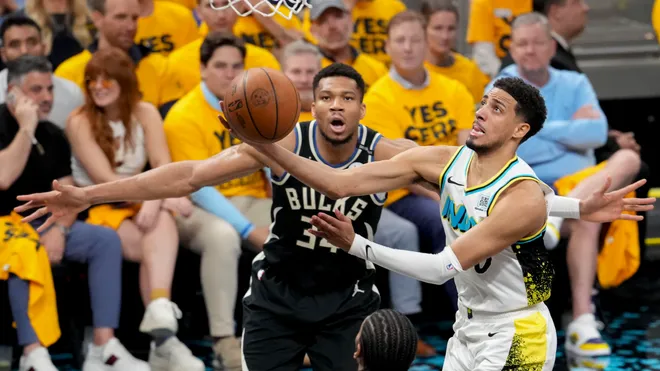
This position may not be a popular one. NBA playoff basketball is high-stakes, and there are times when emotions run high, and sometimes those emotions spill over. That was the case following the Indiana Pacers’ thrilling Game 5 victory over the Milwaukee Bucks — that game ended with Tyrese Haliburton’s go-ahead layup and ultimately the end of Milwaukee’s season. But while the action on the court was intense, the postgame headlines were dominated by a tense interaction: a confrontation between Bucks star Giannis Antetokounmpo and Tyrese Haliburton’s father, John Haliburton.
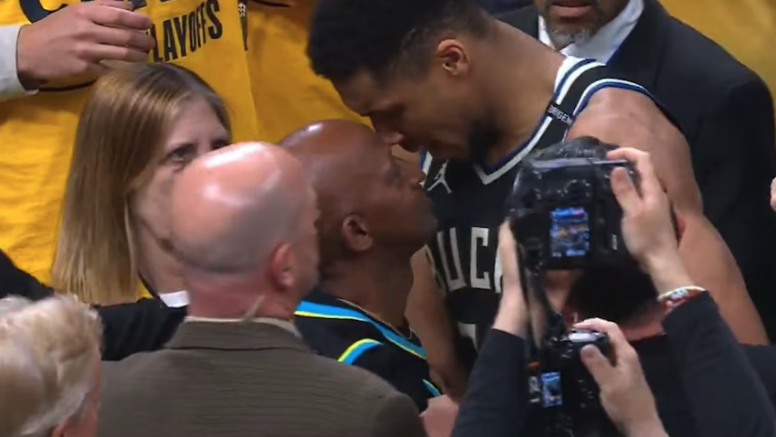
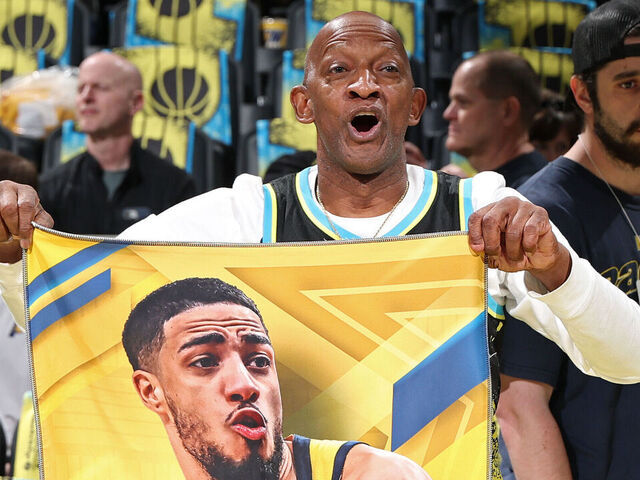
Let’s be clear — this was a moment of poor judgment, not malice. According to Giannis, John Haliburton approached him in a heated fashion, waving a towel with his son’s face on it and swearing following the game-winning play. Giannis claimed he said, “that’s what we f… do”. Mr. Haliburton said, “I waved the banner (towel really) and said, “Yay, Yay”! I never said anything else to Giannis, and he never said anything to me. When we came together, he put his head against mine and said, “don’t f… disrepect me like that”. My response was,
I did not do that on purpose I really did not and then I said to him. I love you he said back to me “I love you.” We patted chest. He gave us a thumbs up and he walked….
During the post-game interview, Giannis, ever the model of professionalism, expressed disappointment in the lack of humility, saying: “I believe in being humble in victory.” It’s hard to argue with his perspective — for a player who embodies grace and class, being met with that kind of response would understandably feel disrespectful.
Yet in the same breath, it’s important to recognize what happened next: accountability.
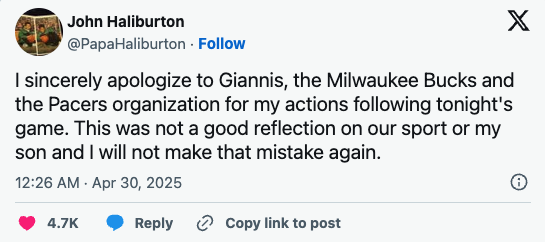
John Haliburton quickly issued a public apology on social media, acknowledging his behavior and taking full responsibility. He wrote, “This was not a good reflection on our sport or my son and I will not make that mistake again.” He didn’t deflect. He didn’t excuse it. He owned it. That kind of contrition should matter — especially in a sports culture that so often glorifies defiance over reflection.
His son, Tyrese, also showed maturity beyond his years in addressing the incident. “Basketball is basketball, and let’s keep it on the court,” he said, reinforcing the idea that while emotions are part of the game, boundaries still matter. His honesty in saying, “I don’t think my pops was in the right at all there,” is a refreshing reminder that leadership isn’t just about scoring points — it’s about setting a tone of respect.
The Pacers front office made the decision that John Haliburton would not attend home or road games for the foreseeable future. And while that step was taken with professionalism and understanding — and was accepted gracefully by the Haliburton family who understands the importance of player safety and consequences for offensive action— it’s fair to ask: does a ban go too far?
In a league that has seen far more serious infractions handled with proportional responses, this feels like a situation best left in the realm of human error, apology, and learning. John Haliburton was wrong — and he acknowledged it. Giannis was right to be upset — and he handled it with poise. And both sides have expressed the kind of maturity that should be applauded, not punished further.
Sports are a reflection of our best and worst impulses. What happened after Game 5 wasn’t ideal, but what followed showed character on all sides. That should be the lasting image from this situation: not a confrontation, but a commitment to do better.
And that’s a win for everyone.
Moments like these remind us of the importance of teachable moments—not just for players, but for families, fans, and the broader sports community. Mistakes are inevitable in the heat of competition, but how we respond to them defines our character. When accountability, humility, and communication follow a misstep, it becomes more than just a controversy—it becomes a chance to grow. That’s what sports, at their best, are all about. ~Packed House Sports