

This quote seems relevant. “Do not wait to strike till the iron is hot, but make it hot by striking.” – William Butler Yeats
Success doesn’t just happen when conditions are ideal—rather, we create our own opportunities through action and persistence.
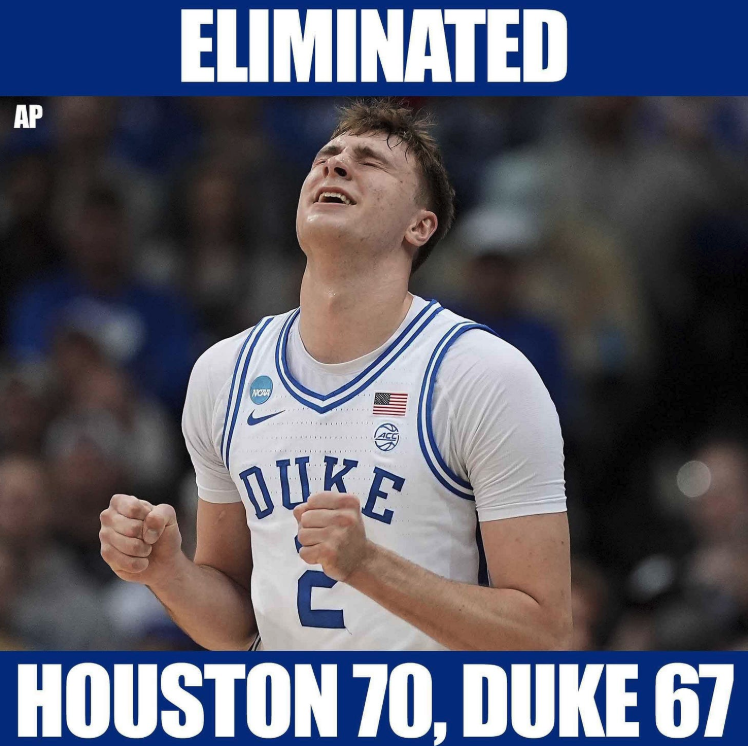
One thing is indisputable, College basketball’s Final Four has always been a high-stakes environment, where pressure can either elevate or shatter a team’s dream, and Houston’s remarkable comeback win over Duke demonstrated a fact—that the power of perseverance is unmatched. The Cougars overcame a 14-point deficit in the second half to stun a TV audience and the Duke Blue Devils with a 70-67 victory—an unexpected and dramatic turn of events. The game, brimming with tension and twists, showcased Houston’s mental toughness and late-game precision while Duke faltered in critical moments.
Duke’s Collapse: A Cautionary Tale of Missed Opportunities
Duke’s performance throughout most of the game suggested an inevitability, victory. Behind the stellar efforts of freshmen Cooper Flagg (27 points) and Kon Knueppel, the Blue Devils appeared to have the game under control. However, as the final minutes approached, Duke’s control began to slip, revealing cracks in their execution that ultimately cost them the game.
In the last 10:35 of the contest, Duke went cold and made only one field goal. Their offense, once efficient, became stagnant, while their defense was unable to stave off Houston’s late surge. The game’s turning point came in the final stretch, where Duke’s inability to handle the pressure exposed them. Struggling to inbound the ball and plagued by turnovers in critical moments, Duke’s once-comfortable lead evaporated. Houston capitalized on every mistake, launching an 11-1 run in the final minute to snatch the victory. A crucial over-the-back foul by Flagg with 20 seconds left sent J’Wan Roberts to the free-throw line, where he sank two clutch shots to give Houston the lead. With Tyrese Proctor missing a critical free throw, Duke’s fate was sealed, and Houston had completed the improbable comeback.
Houston’s Mental Toughness
The game’s turning point was less about Duke’s missteps and more about Houston’s relentless drive. The Cougars never allowed themselves to be defeated, even when the odds seemed stacked against them and their faces carried the weight. The game’s final minute revealed the power of sustained effort, particularly in high-pressure situations. Houston’s defense, which had been suffocating throughout the game, stepped up when it mattered most. Their ability to execute under duress, stifling Duke’s attempts to finish the game, was a desperate and urgent grip, holding to their commitment to the win.
This mindset—setbacks as stepping stones rather than insurmountable obstacles—mirrors the lessons found in the biographical drama film 12th Fail, where perseverance is more than enduring challenges, it’s using them to propel oneself forward. Houston’s defense, never yielding, became a symbol of their unbreakable resolve. It was a yearlong snapshot wrapped in a few minutes. Each defensive stop and clutch shot energized the team, demonstrating how effort, grit, and an unshakeable will can shift the momentum of a game.
A Culture of the Collective: Teamwork at Its Core
Houston’s victory wasn’t the result of any one player’s brilliance but of a collective, unified effort. Unlike Duke, where individual players—despite their immense talent—appeared rattled, Houston’s success was born from their unity and shared commitment. The entire team fed off one another’s energy, as each defensive play and each critical shot reinforced the group’s determination.
This kind of collective spirit demonstrates how group cohesion and shared effort can turn the tide, especially in moments of extreme pressure. When one player holds fast under adversity, the whole team benefits, creating a snowball effect of performance that becomes greater than the sum of its parts.
Adaptability in Crisis
While Duke’s young stars wilted under pressure, Houston’s adaptability became their key to success. In high-stakes moments, the best teams adjust their strategies to exploit weaknesses. Houston did this by tightening their defense and capitalizing on Duke’s struggles with ball movement and inbounding, turning every misstep into an opportunity.
This ability to recalibrate during crises reflects a hallmark of high-performing teams: flexibility. Cryer and Rogers took charge. Houston’s leadership ensured they could pivot when things went awry, using Duke’s mistakes to shift momentum in their favor, ultimately securing the victory.
Patience Over Panic
Houston’s late-game success was grounded in calm and patience, while Duke rushed decisions in panic. Houston focused on the bigger picture, trusting their sustained effort would pay off, while Duke’s inability to finish, and sudden feeling of desperation, led to costly mistakes. Houston’s strategic patience allowed them to stay composed and capitalize on opportunities, whereas Duke’s lack of clarity in the final moments led to their downfall.
Leadership Through Composure: Setting the Emotional Tone
As Duke stalled, Houston’s leaders remained calm, providing a steady influence during the chaos. Leadership in high-pressure moments isn’t just about talent—it’s about maintaining emotional control. Houston’s leaders set the emotional tone, contrasting sharply with Duke’s breakdown. This composed leadership guided the team through adversity, demonstrating the immense value of strong, steady leadership in critical moments.
Humility, Learning, and Turning Setbacks into Opportunities
Duke’s mistakes—missed free throws, turnovers, and rushed decisions—point to gaps in mental preparedness and composure. On the other hand, Houston’s approach was grounded in a mindset that saw failure as an opportunity to learn and grow. Teams that succeed in the face of adversity tend to possess a “learn-it-all” mentality, one that embraces mistakes as a necessary part of improvement. This is akin to the philosophy embraced by Thomas Edison, who turned his many failed experiments into a stepping stone to eventual success.
For Houston, every missed shot or challenging moment in the game was unnerving but viewed as another chance to refine their approach. Kelvin Sampson begged them to embrace this mindset, and the Cougars demonstrated how setbacks can be powerful catalysts for growth, ultimately leading to their moment of victory.
The Art of Staying the Course
Houston’s stunning comeback almost seemed accidental—while many will use language like, it was a masterclass in perseverance, adaptability, and the power of collective effort—it was the product of a series of fortunate events in a game where chaos was the constant. The Cougars’ victory unfolded not as a carefully orchestrated masterpiece, but as a raw demonstration of the unpredictable nature of sport. They didn’t seize victory through flawless execution but by embracing the chaos and capitalizing on a very special Duke team’s unraveling moments.
In the end, Houston’s win was less about making the perfect play and more about refusing to fold when the game appeared lost. Their victory, born from a mix of grit, circumstance, and relentless drive, exemplified the very essence of the tournament—the improbable, the unexpected, and the power of a refusal to quit in the face of insurmountable odds. This team fought for their win; and they believed the game was never over, no matter how dire the situation seemed.
A valuable lesson: success isn’t always a matter of being the most skilled or prepared, but are you willing to be the most determined when the odds are at their steepest. Good things do come to those who work—but sometimes, they come in the most unpredictable of ways.
Support Packed House Sports on Substack for free subscriber and paid content.