
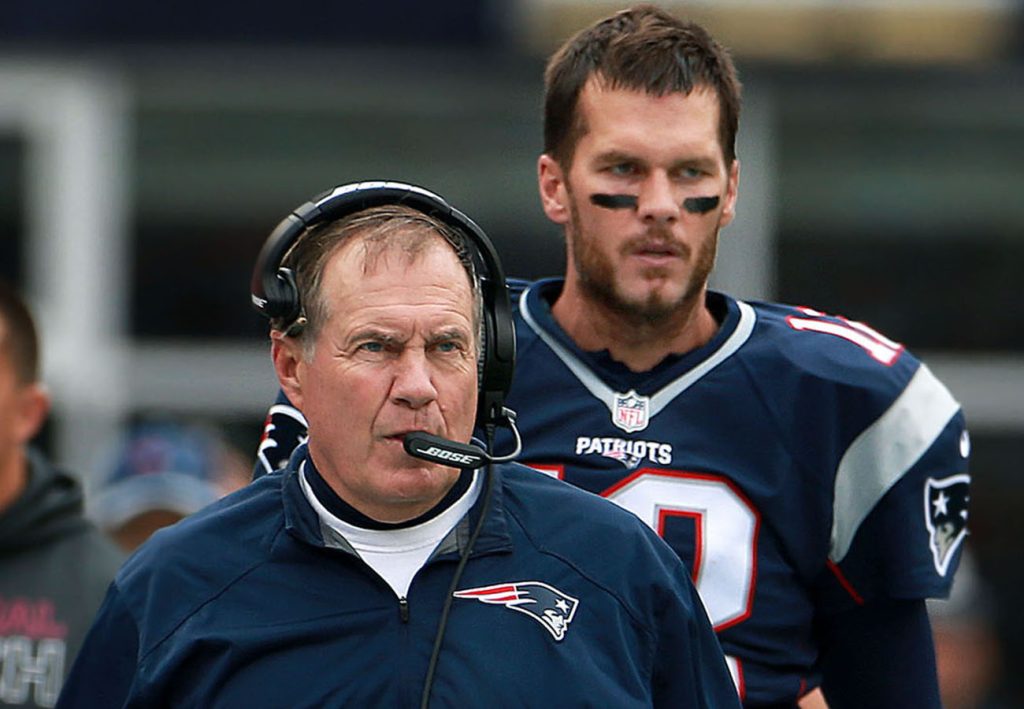
The National Football League has laid bare the lifecycle of partnerships—great partnerships—that shape the very essence of the game. But behind every legendary duo, there usually lies some level of tension, a friction that pushes both men to places they could not have reached without abrasion. The greatest of quarterbacks and their coaches, bound by a shared pursuit of victory, driven by conflicting egos, and yet, through it all, propelled to heights of success that defy belief.
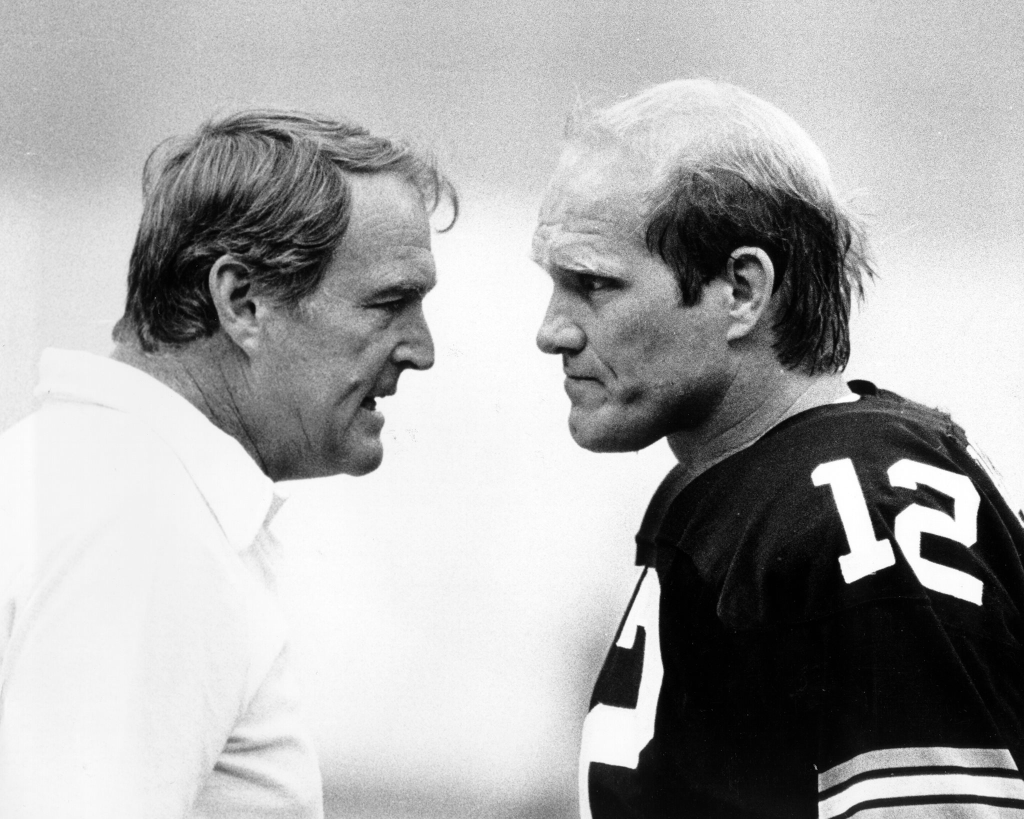
Take Terry Bradshaw and Chuck Noll, for example. A quarterback with fire in his heart, a coach with ice in his veins. Bradshaw once said it plainly: “I damn sure didn’t always like him.” And yet, together, they forged the Pittsburgh Steelers into a dynasty, capturing four Super Bowls in the 1970s. A relationship fraught with tension—but one that ultimately left an indelible mark on the history of the game.
Or consider Phil Simms and Bill Parcells. A relationship characterized by shouting matches and hard truths. “Mutually respectful but perpetually uneasy,” Simms called it. Parcells, never one to sugarcoat things, once told Simms, “If you don’t throw at least two interceptions today, that means you’re not trying enough.” And yet, this combustible mix resulted in a Super Bowl victory—a partnership that burned hot, and in the end, delivered the ultimate prize.
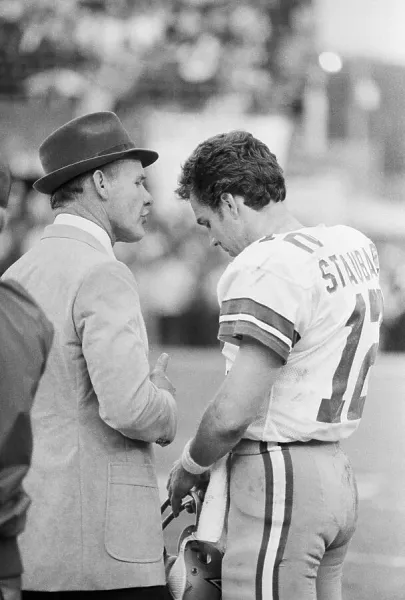
Then, there was Roger Staubach and Tom Landry. Staubach, the independent spirit, occasionally felt that Landry’s heavy hand was too much to bear. Landry, the meticulous strategist, running both offense and defense. But together, they led the Cowboys to Super Bowl glory, building the foundation for a franchise that would become known as “America’s Team.” Their disagreements were quieter than most—but no less significant. And the fans knew it.
But perhaps the greatest and most complex relationship of all was that of Tom Brady and Bill Belichick. A pairing that changed the very fabric of the NFL. Six Super Bowls. Twenty years. An unmatched legacy. Yet, as Brady recently admitted, tension began to simmer in those final years in New England. He said it simply: “We were heading in different directions.” A relationship that once felt unstoppable now strained, pulled apart by diverging visions for the future.
“After twenty years together, a natural tension had developed between where Coach Belichick and I were headed in our careers, and where the Patriots were moving as a franchise,” Brady wrote. “It was the kind of tension that could only be resolved by some kind of split or one of us reassessing our priorities.”
For years, Brady considered leaving—wondering if the Patriots’ vision was his own. The franchise, Belichick, and Brady were all evolving, shifting in different ways. But neither was willing to reassess their priorities, and in the end, it was Brady who took the bold step to move on—leaving for Tampa Bay, where he led the Buccaneers to a Super Bowl victory in his very first season. An ending, painful for some, but perhaps inevitable for both.
But here’s the thing—despite the tension, despite the departure, Brady and Belichick remain, in a sense, connected. Belichick attended Brady’s roast. Brady, reaching out to Belichick about the Raiders’ head-coaching job. A relationship that ended with the inevitable clash of differing paths, but one that, in the end, found a moment of peace. A reminder that, sometimes, greatness can emerge from the most tenuous of relationships.
So, what can we learn from these stories? The great quarterbacks and coaches—Bradshaw and Noll, Simms and Parcells, Staubach and Landry, Brady and Belichick—they all share something in common. In the heat of competition, in the pursuit of perfection, tensions rise. But from those tensions, greatness can emerge as an outcome. And though such relationships often end in painful separations, their legacies are eternal.
In the end, it’s this—greatness, forged in the fire of conflict that leaves a mark on history. And it’s this very tension that made these men football immortals.
This is the story of football’s greatest duos. A story of tension, triumph, and the undeniable truth that in the game of life, and the game of football, greatness is often born from the most tenuous of relationships.