
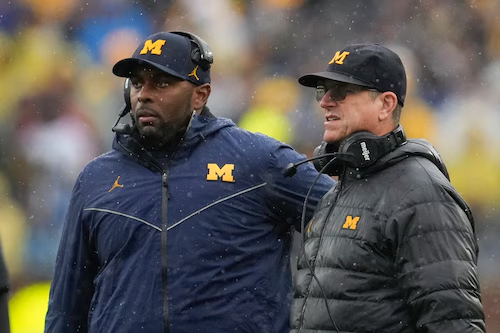
The NCAA has issued a significant ruling against former Michigan football coach Jim Harbaugh, imposing a four-year show-cause penalty that underscores serious concerns regarding his management of the program. The governing body found that Harbaugh violated recruiting and inducement rules, engaged in unethical conduct, and failed to promote a culture of compliance. The NCAA stated that he “failed to meet his responsibility to cooperate with the investigation,” resulting in the harsh penalty.
Despite Harbaugh’s recent insistence on accountability and his defiant stance in the face of looming allegations, the NCAA’s decision reflects a stark reality. He had previously maintained that he had no need to apologize for his actions.
The show-cause penalty does not complicate Harbaugh’s current position in the NFL. But it would should he ever desire to try to return to the NCAA, as it means that any NCAA member school interested in hiring him would need to demonstrate acceptance of the penalty’s terms.
Notably, this ruling is distinct from the ongoing investigation into the sign-stealing scandal involving Connor Stalions, indicating that Michigan’s challenges may not be over. Harbaugh’s refusal to back down or issue an apology could be seen as either a demonstration of his conviction or a potential hindrance to his career. As the situation unfolds, it adds further complexity to Harbaugh’s coaching legacy.
Also, Sherron Moore, the Michigan Wolverines’ offensive line coach, has come under scrutiny as well due to NCAA allegations concerning the football program. The NCAA has pointed to issues related to compliance and oversight during his tenure, particularly in connection with the broader investigation into the program.
Moore, who has been a key figure in Michigan’s coaching staff, is facing questions about the culture and practices within the program. The allegations suggest that there were failures in monitoring recruiting activities and adherence to NCAA regulations. As the investigation unfolds, the implications for both Moore and the Michigan football program could be significant, potentially affecting recruiting efforts and the team’s standing.
The Outtake
As programs like Michigan face increasing scrutiny, the spotlight on coaches and their responsibilities is more intense than ever.
This scenario highlights a critical shift in college sports, where compliance and ethical conduct are becoming non-negotiable aspects of coaching. Coaches like Moore, who are rising stars in the profession, now find themselves navigating an environment where their actions and the culture they foster can have lasting repercussions.
Also, the pressure on coaching staffs to win while adhering to strict regulations can create a tension that is hard to manage. Moore’s case underscores the challenges of maintaining integrity in a competitive atmosphere, where the desire to succeed may sometimes conflict with the need to follow the rules.
Ultimately, this situation serves as a reminder that the future of college athletics will depend not only on talent and strategy but also on a commitment to transparency and ethical practices. For young coaches like Moore, this means embracing a proactive approach to compliance, shaping a culture that prioritizes integrity, and recognizing that success is measured not just in wins but in how those wins are achieved.