

42-19. Four wins, eight losses. Zero victories against in-state rivals. A Chapel Hill collapse.
When Bill Belichick arrived at North Carolina last December with a $10 million annual salary guaranteed for three years, the college football world watched with anticipation. Could the six-time Super Bowl champion, owner of 333 regular-season and playoff wins, translate NFL dominance to the college game? Twelve months later, we have our answer—and it’s ugly. Think Cleveland ugly.
The Numbers Don’t Lie
UNC finished 4-8 overall and 2-6 in ACC play, marking the program’s worst season since going 2-9 in 2018. Just one year ago under Mack Brown, this same program finished 6-6 and reached a bowl game. The decline is staggering when you examine the details:
- Five losses by 16 or more points
- Combined record of 15-32 for UNC’s four opponents in victories (Charlotte, Richmond, Syracuse, Stanford)
- Went 0-8 against teams with five or more wins, losing by an average of 17 points
- First time since 1989 losing to all three in-state ACC rivals in the same season
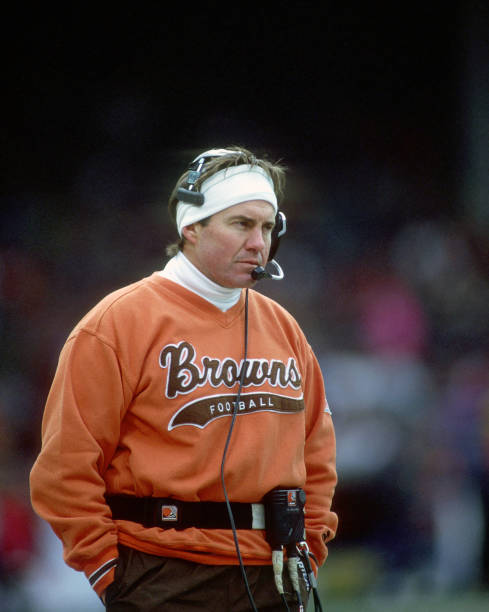
The opener set the tone: a 48-14 shellacking by TCU that allowed the most points of Belichick’s 29-year head coaching career. For context, when Belichick struggled as Cleveland Browns head coach from 1991-1995, he compiled a 36-44 record. He’s currently on pace to match or exceed that failure rate in Chapel Hill.
The “33rd NFL Team” Experiment Failed
General Manager Michael Lombardi proclaimed the Tar Heels would operate as the “33rd NFL team” with a pro-heavy influence throughout the program. That arrogance became the program’s Achilles heel. A scathing October report revealed sources describing the culture as “an unstructured mess” with “no culture, no organization”, noting that Belichick hadn’t spoken with most defensive players and that they didn’t even have his phone number.
The discipline issues spoke volumes. UNC committed 11 penalties for 129 yards in Saturday night’s season-ending loss to NC State, following 12 penalties the previous week against Duke. The fundamentals that made Belichick legendary in the NFL were nowhere to be found.
Saturday Night’s Final Humiliation
At Carter-Finley Stadium, NC State backup quarterback Will Wilson ran for four touchdowns while the Wolfpack scored on all four first-half drives to build a commanding 28-10 halftime lead. The 42-19 final marked NC State’s fifth consecutive win over UNC—extending coach Dave Doeren’s dominance to 9-4 all-time against the Tar Heels.
Doeren admitted the matchup motivated him: “There was pep in my step this week for sure. I wanted that win, the competitive part of me against him. It’s very meaningful.”
After the game, Belichick gave the shortest press conference of his debut season—just over four minutes. “Look, the season’s just ended a few minutes ago, OK? So now we’re going to move into the offseason. That’s what we’re going to do.” He refused to provide any season recap or big-picture assessment. Belichick doesn’t do self-reflection—he relies on lieutenants to confront him with hard truths. Without a Brady, Harrison, or Bruschi in the building to force honest assessment, certain problems might fester unaddressed.
Beyond the Scoreboard: A Culture Crisis
The problems extended far beyond X’s and O’s. Midseason reports painted an image of turmoil behind the scenes, with multiple players cited for speeding or reckless driving. There was tabloid-level attention on Belichick’s relationship with his 24-year-old girlfriend, a frequent sideline presence. The distractions were constant, the results disastrous.
Quarterback inconsistency plagued the season. UNC never established an offensive identity, cycling through two signal-callers without ever finding rhythm. The running game showed only sporadic effectiveness. Offensive and Defensive coordinator play-calling ranged from bad to dormant.
Most painful for fans: this wasn’t a rebuilding year with inherited players. Belichick brought in approximately 70 new bodies—these were largely his recruits, his system, his vision. But let him tell it, and his coaches never had their own recruits.
What Comes Next?
Three realistic scenarios emerge:
Scenario 1: Modest Improvement Through Fundamentals
Belichick doubles down on basics—discipline, tackling, execution. With another recruiting class and roster adjustments, UNC shows incremental progress. This requires patience from administrators and donors barely willing to extend it after such a brutal debut.
Scenario 2: Continued Struggles and a Quick Exit
If early 2026 results mirror 2025—especially more rivalry losses—the experiment ends. The financial investment was massive. The return has been negligible. Another disappointing season could force both sides toward a clean break, sending UNC into yet another coaching search.
Scenario 3: Adaptation While Staying the Course
Belichick adjusts his approach to college football’s unique demands while maintaining core principles. He recalibrates expectations, emphasizes relationship-building with players, and delegates more effectively to assistants. This middle path allows stability while acknowledging necessary changes.
The Bottom Line
As someone who played at UNC during a successful era under Mack Brown, I understand what this program can be. Saturday night wasn’t just another loss—it symbolized a year of unfulfilled promises, cultural dysfunction, and competitive regression.
Wide receiver Jordan Shipp, who plans to return next season, offered perspective: “We’re not as bad as our record shows. We showed glimpses, we just didn’t do enough.” The great Bill Parcells would say, “no young man, you are what your record says you are!”
Glimpses don’t win rivalry games. Potential doesn’t earn bowl bids. And pedigree alone doesn’t guarantee success.
Belichick has earned the right to year two. But the leash will be short, the scrutiny intense, and the margin for error virtually nonexistent. The 2026 season isn’t just about improvement—it’s about survival. For a coach who once dominated the NFL, that’s a humbling place to be.
The offseason work begins now. Whether it leads to redemption or a painful acknowledgment that college football requires different skills than Belichick possesses remains to be seen. But one thing is certain: year one was an unmitigated disaster, and Chapel Hill deserves better.
“Successful people have fear, successful people have doubts, and successful people have worries. They just don’t let these feelings stop them.”