
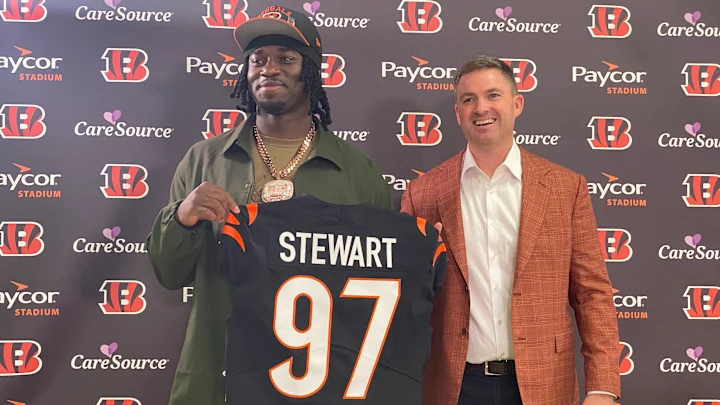
The Bengals’ Contract Conundrum: How Cincinnati’s Hardline Approach May Backfire
A rookie holdout exposes deeper problems with the organization’s negotiation strategy
When the Cincinnati Bengals selected Texas A&M defensive end Shemar Stewart with the 17th overall pick in April’s draft, they expected to add a dynamic pass rusher to complement their championship aspirations. Instead, they’ve created the NFL’s first major rookie holdout since 2016—and it’s entirely self-inflicted.
Stewart hasn’t set foot in Paul Brown Stadium since draft night. He skipped mandatory minicamp in June, bypassed the entire offseason program, and shows no signs of budging as training camp approaches. The reason? Cincinnati inserted unprecedented contract language that could void his guaranteed money for off-field conduct issues—language they didn’t include in recent first-round deals.
This isn’t just about one player’s contract. It’s about an organization that can’t seem to escape its own abrasive approach to negotiations, creating unnecessary friction with both rookies and veterans alike.
Core Dispute
The disagreement centers on specific contract language that could potentially void future guaranteed money. Stewart’s expected four-year, $18.94 million fully guaranteed rookie deal contains unprecedented language that would allow the Bengals to eliminate future guarantees based on off-field conduct issues, including arrests or suspensions.
Key Issues
Inconsistent Contract Terms
The problematic language was not included in recent first-round contracts for Myles Murphy (2023) and Amarius Mims (2024), with Mims selected just one spot lower than Stewart at No. 18. This inconsistency undermines the standard rookie contract structure and gives Stewart legitimate grounds for objection.
Broader Pattern
Stewart’s holdout coincides with veteran pass rusher Trey Hendrickson’s contract dispute, suggesting systemic issues with Cincinnati’s approach to player negotiations. The organization appears to be implementing more restrictive terms without precedent from previous deals.
Stewart’s Leverage Options
A CBS report correctly identifies Stewart’s potential responses:
- Re-enter 2026 NFL Draft – Unprecedented but legally possible
- Request trade – Must be completed 30 days before regular season
- Return to Texas A&M – Maintain college eligibility for senior year
Strategic Implications
The Bengals want to establish clear language that any contract default eliminates all future guarantees, representing a significant shift in rookie contract structure. However, this approach creates several risks:
- Sets concerning precedent for future draft picks
- Damages relationships with player agents and the NFLPA
- Potentially undermines team culture and veteran leadership
Recommendations
The organization should consider standardizing contract language across all rookie deals to avoid future disputes. Stewart’s stance pushes back against widespread assumptions that new players will simply submit to organizational preferences, suggesting this could influence other rookie negotiations league-wide.
Conclusion
This dispute extends beyond a single contract negotiation, representing Cincinnati’s broader approach to player relations. The organization’s inability to resolve what should be a straightforward rookie signing raises questions about their negotiation strategy and long-term roster management capabilities.
(Source: John Breech, CBS Sports)