

April 15 is more than a date on the baseball calendar—it’s Jackie Robinson Day, a national moment of reflection and celebration. Each year, players across Major League Baseball wear the number 42 to honor the man who didn’t just break the sport’s color barrier—he redefined what leadership looks like in the face of adversity.
On this day in 1947, Jackie Robinson took the field for the Brooklyn Dodgers, becoming the first Black player in modern Major League Baseball. It was a moment that transcended sports. In that instant, the game—and the nation—changed forever.
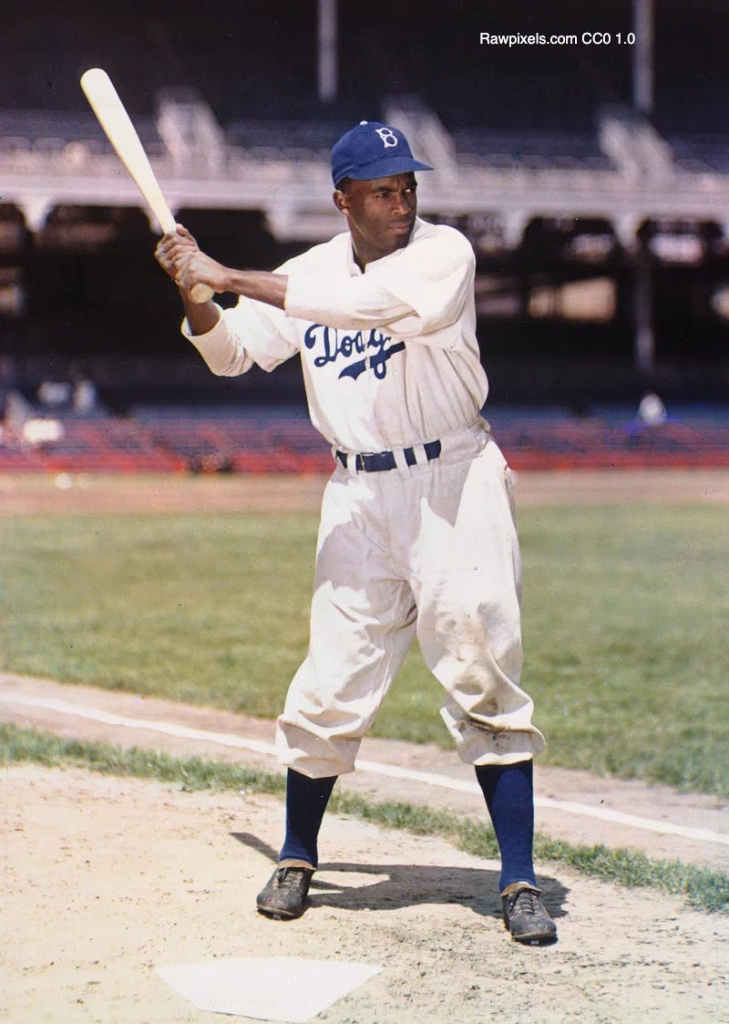
A Trailblazer Before He Wore Dodger Blue
Long before he made history at Ebbets Field, Jackie Robinson was already a standout in the Negro Leagues, where his excellence was undeniable. He was a four-sport athlete at UCLA, a U.S. Army veteran, and a disciplined competitor whose talent and integrity commanded attention. But his journey wasn’t just about skill—it was about purpose.
When Dodgers GM Branch Rickey invited him to integrate MLB, Jackie wasn’t just taking a roster spot—he was taking on the weight of a movement. He faced racism, threats, and isolation, all while being expected to remain composed and excellent at every turn. And he did.
He didn’t fight back with words. He fought back with performance, grace, and results. He became Rookie of the Year in 1947, a National League MVP, a six-time All-Star, and a World Series champion. More importantly, he became a symbol of what’s possible when we challenge injustice with determination and courage.
Beyond the Ballpark
Jackie Robinson’s influence didn’t end when he retired from baseball. He broke barriers in business, becoming the first Black vice president of a major American corporation. He co-founded the Freedom National Bank in Harlem to provide financial services to underrepresented communities. And he used his platform to advocate for civil rights, economic justice, and access to opportunity.
He was more than a sports icon—he was a cultural and civic leader whose values continue to shape how we define equity and leadership today.
Lesser-Known Facts About Jackie Robinson
Early Life and Athletics
- Named after Theodore Roosevelt – Jackie’s middle name, Roosevelt, was chosen by his mother to honor President Theodore Roosevelt.
- Four-sport star at UCLA – He excelled in football, basketball, track, and baseball, becoming the university’s first athlete to letter in four sports.
- Undefeated football team – In 1939, Robinson was a key contributor to UCLA’s undefeated football team.
- NCAA long jump champion – He won the NCAA long jump title in 1940.
- Ping-pong champion – At just 15 years old, Jackie won the Pasadena City Ping-Pong tournament.
Beyond Baseball
- First Black VP of a major corporation – After retiring from baseball, Robinson became vice president of Chock Full o’ Nuts, marking a first for African Americans in corporate leadership.
- Co-founder of a bank – He helped establish Freedom National Bank in Harlem to support financial empowerment in the Black community.
- Civil rights activist – Jackie was a committed civil rights advocate, supporting the NAACP and actively challenging segregation in American life.
- First Black baseball announcer on national TV – He made history again as a baseball analyst on ABC-TV Sports.
Military Service
- Court-martialed for standing up to racism – While serving in the U.S. Army, Robinson was court-martialed for refusing to move to the back of a segregated bus—an early and bold stand against racial injustice.
A Legacy Still Being Written
Today, Jackie Robinson’s number 42 is retired across all of Major League Baseball—a singular honor reflecting his unmatched legacy. Every April 15, players, coaches, and fans unite to honor his life and impact. Stadiums across the country host commemorative ceremonies, youth programs, and community events to recognize his lasting contribution.
But honoring Jackie means more than wearing a number. It means standing for what he stood for: dignity, fairness, courage, and progress.
Why 2025 Matters
This year’s Jackie Robinson Day also arrives with renewed urgency. Recently, a Department of Defense profile on Jackie was temporarily removed from its public site, sparking criticism across the sports and cultural landscape. Although the article was eventually restored, the response—or lack thereof—by Major League Baseball and the Dodgers has left many disappointed.
Some argue that an organization forever tied to Jackie’s legacy should have been at the forefront of defending it. After all, it was his jersey, his courage, and his story that reshaped the identity of the Dodgers—and by extension, the league itself.
Moments like this remind us that legacies aren’t just celebrated—they must be protected. And protection requires action, not just reverence.
Moving Forward, Inspired by the Past
Jackie Robinson once said, “A life is not important except in the impact it has on other lives.” His life—on and off the field—continues to impact millions. From the young athlete dreaming of opportunity, to the business leader challenging barriers, to the citizen demanding fairness—Jackie’s legacy speaks to us all.
As we reflect on his journey this April 15, let’s do more than remember history—let’s live it. Let’s speak up, show up, and build the kind of future Jackie Robinson fought for. One rooted in justice. One grounded in empathy. One driven by the courage to do what’s right, even when it’s hard.
Because if Jackie could change the world in 1947, then we can keep changing it today.
#JackieRobinsonDay #42 #LegacyOfLeadership #SportsAndSociety #JusticeInAction #MLB #BrooklynDodgers #HistoryThatMatters