
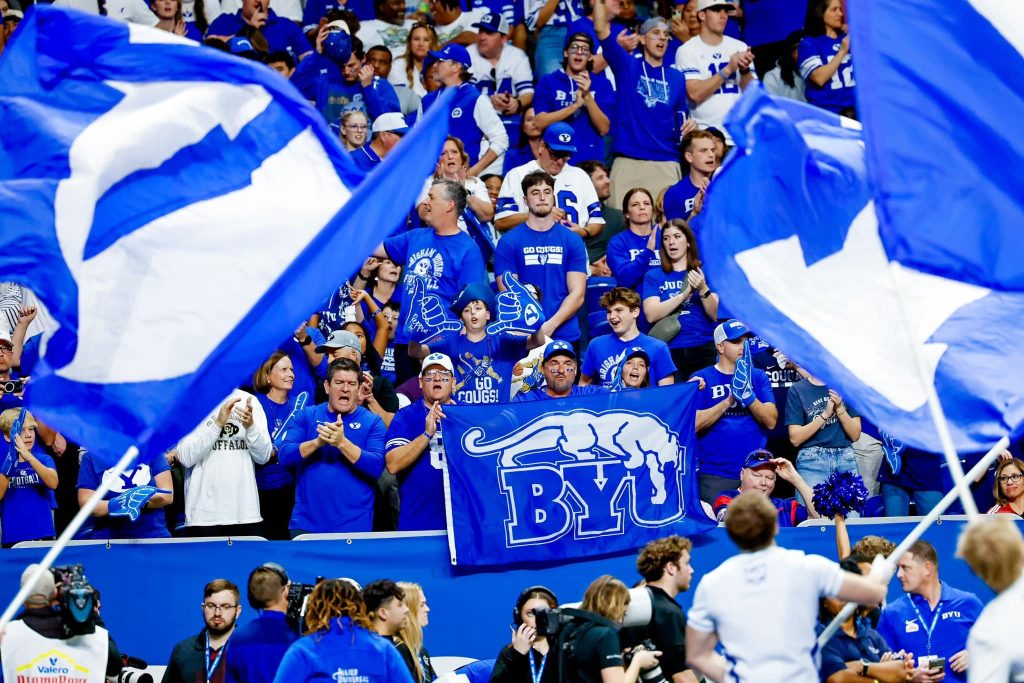
FROM SAN ANTONIO — Colorado’s bid to end its long bowl-game drought came to a crashing halt on Saturday night in the Valero Alamo Bowl as the No. 20 Buffaloes fell 36-14 to No. 17 Brigham Young. In a game that exposed glaring weaknesses on both sides of the ball, the Buffs closed out their season at 9-4, while BYU improved to 11-2.
For a team led by the dynamic Deion “Coach Prime” Sanders, Saturday’s performance was a harsh reality check. The Buffs’ offense, which had shown flashes of brilliance throughout the year, was completely stifled by BYU’s aggressive defense and special teams play. Colorado finished the night with a season-low 210 yards of offense, including a staggering 2 yards on the ground. Quarterback Shedeur Sanders threw for 208 yards and two touchdowns, but the Buffs also suffered four sacks and two costly interceptions, effectively derailing any hopes of a late comeback.
First Half: Buffs’ Offensive Woes and Special Teams Blunders
From the opening whistle, it was clear that Colorado’s offense was out of sync. The Buffs were held to just 61 yards of offense in the first half, struggling against a BYU defense that seemed to have every answer. Sanders, under constant pressure, threw incomplete on a critical fourth-and-1 early in the first quarter, giving BYU the ball on Colorado’s 48-yard line. Seven plays later, the Cougars were in the end zone, taking a 7-0 lead.
The Buffs’ offense quickly found itself in a hole. After a 10-yard sack on Sanders, a short punt gave BYU excellent field position at the Colorado 41-yard line. While the Buffs’ defense did show some resilience — including a sack by Chidozie Nwankwo — BYU managed a 51-yard field goal to go up 10-0.
Special teams added insult to injury. On the ensuing kickoff, BYU caught Colorado off guard with a successful onside kick recovery, giving them even more momentum. Though Colorado’s DJ McKinney came up with an interception to stall the Cougars’ drive, the Buffs couldn’t capitalize offensively. A promising drive into BYU territory ended when Alejandro Mata’s 48-yard field goal attempt sailed wide left, leaving the Buffs still scoreless at the break.
Things only got worse in the second quarter. BYU’s Parker Kingston took a punt return 64 yards for a touchdown, pushing the lead to 17-0. Colorado’s defense bent but did not break at times, including a turnover created by Anquin Barnes’ interception of a deflected pass. However, the Buffs’ offense was unable to move the ball, resulting in another three-and-out and a 54-yard field goal by BYU as time expired in the half. At 20-0, Colorado faced a daunting deficit, with their offense showing no signs of life.
Second Half: Brief Spark, But Ultimately Too Little, Too Late
The Buffs came out with a little more energy in the third quarter, finally putting together a scoring drive. Sanders connected with Travis Hunter for a 43-yard touchdown pass, trimming the lead to 27-7. But any momentum the Buffs had quickly evaporated. A tipped Sanders pass was intercepted by BYU on the very next possession, and the Cougars responded with a methodical 55-yard touchdown drive to push the lead back to 27 points.
From there, Colorado’s hopes of a comeback were dashed. Sanders threw his second interception of the game, setting up a short field for BYU, which converted a field goal to make it 36-7 with just under six minutes left.
In a season marked by inconsistency, Colorado did manage a final scoring drive to close out the game. A 7-play, 82-yard march was capped by a 2-yard touchdown pass from Sanders to tight end Sav’ell Smalls, providing the final margin of 36-14. But the game, which had long been out of reach, left more questions than answers about the state of Colorado’s program heading into the offseason.
A Season of Promise, but Ultimately Disappointment
While 9-4 is an impressive record for a team that had not been bowl-eligible in recent years, this loss underscored the gap between Colorado and the nation’s elite teams. The offense, which had been explosive at times during the regular season, failed to find any rhythm against BYU’s defense, which exposed the Buffs’ struggles with both the running game and protecting the quarterback. Sanders, despite his talent, was repeatedly harassed, and the offensive line failed to give him the necessary time to make plays.
Defensively, Colorado did make some key stops, including the aforementioned interceptions and sacks, but the Cougars’ balanced attack — 180 yards on the ground, combined with special teams fireworks — was too much to overcome. BYU controlled the tempo of the game and dominated in every phase, while Colorado seemed outclassed in the trenches.
The game also highlighted some of the growing pains that come with a rebuilding program. While Coach Prime has undoubtedly injected new energy into the Buffs, the loss exposed the need for further development in both the offensive and defensive lines. With the 2025 season on the horizon, the Buffs will need to address these weaknesses to take the next step and contend for higher honors in the Pac-12.
Ahead
Despite the disappointing finish, Coach Prime’s second season in charge of Colorado cannot be considered a failure. The Buffs made significant strides, ending a long bowl drought and establishing themselves as a team to watch in the Pac-12. But Saturday night’s loss was a sobering reminder of the work that remains for Colorado to compete at the highest level.
As they head into the offseason, the Buffs will have a chance to assess their weaknesses, recruit new talent, and refine their strategy. If they can make the necessary adjustments, the Buffs could very well be primed for a breakout campaign in 2025. But for now, Coach Prime and his squad will have to digest the bitter taste of another bowl loss, one that leaves more questions than answers.