
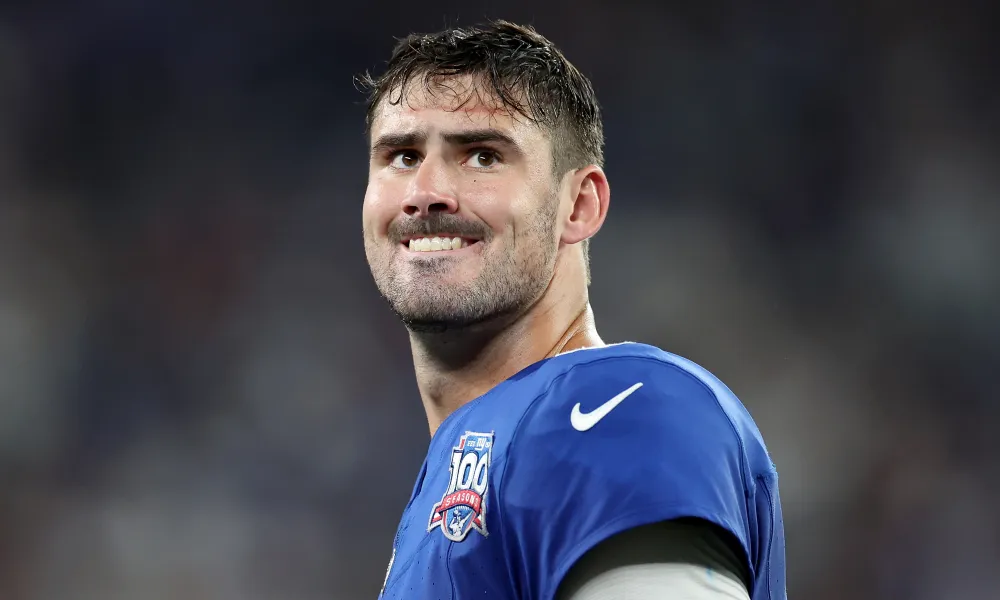
The Fall and Future of Daniel Jones: Can He Rise Again?
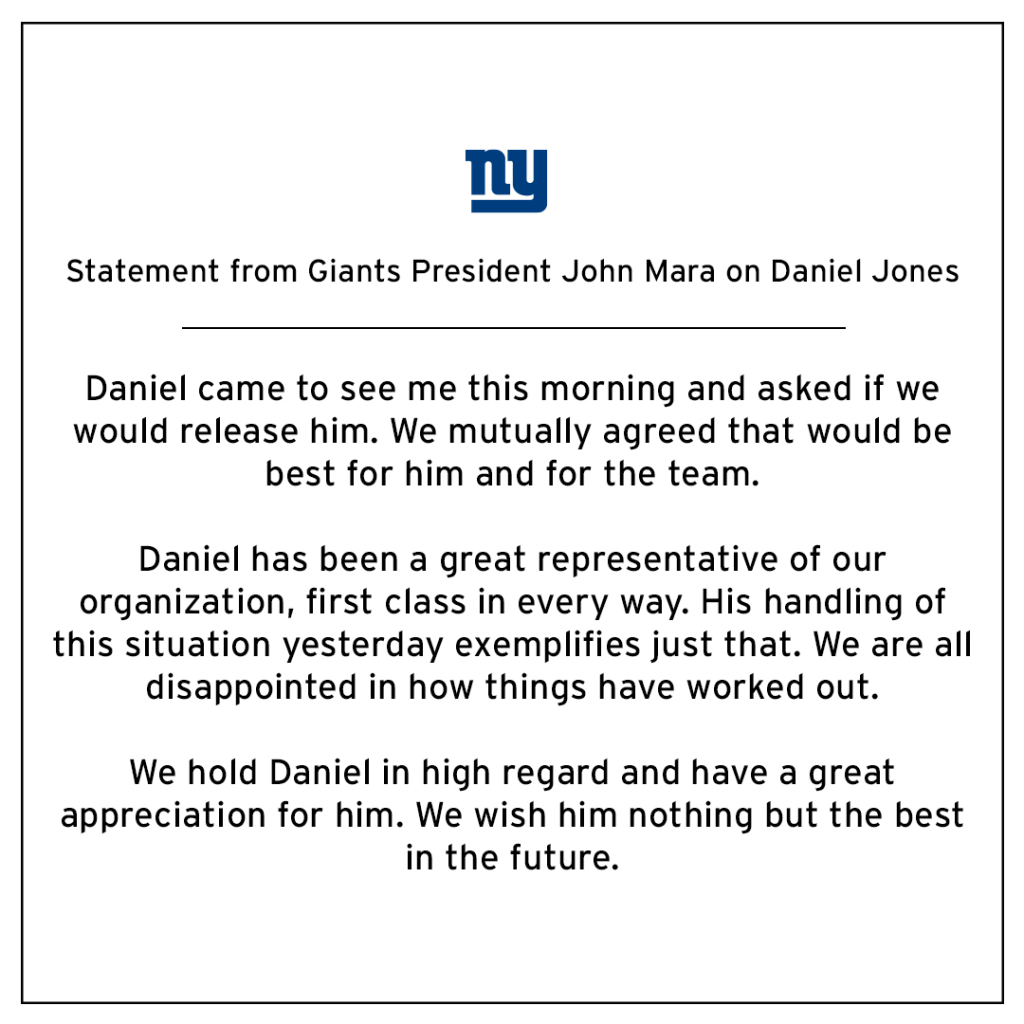
It’s been 626 days since Daniel Jones signed his four-year, $160 million extension with the New York Giants. On paper, the contract marked a new chapter in what many hoped would be a franchise-altering era for the Giants. For Jones, a former sixth overall pick in the 2019 NFL Draft, it seemed like the culmination of a long journey—a young quarterback on the cusp of greatness after flashes of brilliance. Yet, in the time since, the narrative has shifted dramatically. His record stands at a dismal 3-13, with one of the most infamous moments being his benching, followed by an even more bizarre stint as a scout team safety. This morning, Jones requested his release, signaling the likely end of his tenure with the Giants and the closing of this particular chapter of his career.
The question that now lingers is: What went wrong, and can Daniel Jones rise again?
The Disappointing Decline
To understand the full arc of Jones’ fall from promise to desperation, it’s essential to acknowledge that there were, at one point, legitimate reasons for optimism. Early in his career, Jones exhibited qualities that were tantalizing to anyone who hoped for the next great NFL quarterback: a live arm, impressive mobility, and moments of sharp decision-making that hinted at a player capable of leading a franchise.
But those flashes soon proved to be fleeting. Jones’ development as a quarterback has been, at best, uneven, and at worst, regressive. His performance on the field has been plagued by inconsistent mechanics, chronic turnover problems, and an inability to execute under pressure. For every impressive play—such as a deep throw under duress or a clutch scramble—there seemed to be two more critical mistakes, whether it be an interception, a sack, or a fumble at an inopportune moment. In a league that demands precision, accountability, and leadership from its quarterbacks, Jones has struggled to maintain the necessary level of consistency to inspire confidence in the Giants’ offense.
But to focus solely on Jones’ shortcomings would be disingenuous. The surrounding context is just as crucial. Jones’ tenure has been defined by a revolving door of offensive coordinators and coaching staffs. From Pat Shurmur to Joe Judge to Brian Daboll, the lack of stability within the coaching staff only exacerbated the challenges he faced. A young quarterback needs a clear, coherent offensive system to grow within, and Jones was thrust into a series of disjointed schemes that prevented him from finding his rhythm.
Moreover, the supporting cast around him was rarely up to snuff. The Giants’ offensive line was porous for much of Jones’ time, leaving him with little time to operate in the pocket. The receiving corps, meanwhile, has been among the least dynamic in the league, with injuries to key playmakers like Saquon Barkley and a lack of elite talent at wide receiver making it even harder for Jones to find success. It’s tough for any quarterback to thrive under those circumstances.
The Rock Bottom
No moment crystallized Jones’ decline more than his benching and subsequent role as a scout team safety. The benching alone—one of the ultimate signs that a coaching staff has lost confidence in a starting quarterback—was a clear signal that the Giants had seen enough. But being moved to scout team duty? That was the equivalent of a once-promising career being relegated to a sideshow. For a quarterback who was once viewed as the future of the franchise to be asked to play as a defensive player, simulating an opponent’s quarterback, was as much a humiliation as it was a confession of failure.
Jones’ path reached its inevitable conclusion this morning with his request for release, confirming what many had suspected for months: his time with the Giants was done. A fresh start, it seems, is now necessary for both parties.
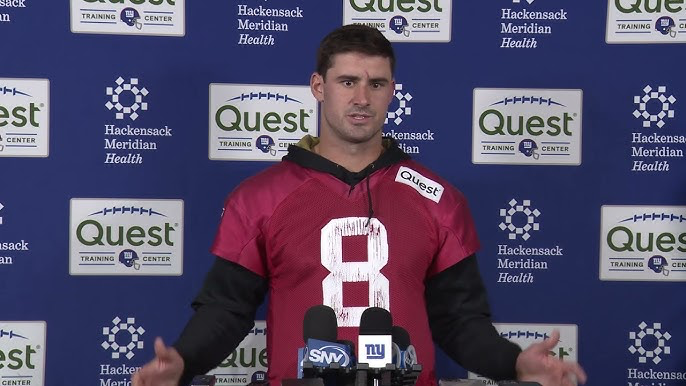
The Case for Belief
Yet, despite the adversity, the disappointment, and the frustration that has surrounded his career, there remains a case to be made for Daniel Jones. Perhaps it’s a case that requires faith, but it’s a case that should not be dismissed too quickly.
Yes, his time in New York has been fraught with setbacks, and yes, his play has too often failed to meet expectations. But that doesn’t mean Jones is doomed to a career as a cautionary tale, nor does it mean he’s incapable of rising again. In fact, the very traits that made him a promising prospect years ago—his athleticism, his ability to move, his arm strength—still hold value in the right context.
History is littered with examples of quarterbacks who stumbled early in their careers, only to find new life when placed in the right environment. Ryan Tannehill, once a castoff in Miami, revived his career in Tennessee, leading the Titans to the playoffs multiple times. A similarly revitalized career could be in the cards for Jones if he lands in a system that fits his skills and provides him with the support he hasn’t had in New York.
Imagine Jones in a quarterback-friendly offense with a stable, patient coaching staff and a solid offensive line. Picture him behind a strong, run-first team where he’s not required to carry the offense on his shoulders, but rather play within a system that allows him to make the most of his talents without forcing him into situations that highlight his weaknesses. Could he be the next reclamation project? It’s certainly plausible.
What’s Next?
As Jones enters free agency or pursues another opportunity with a new team, the next steps in his career will be crucial. The quarterback market is notoriously fickle—many teams are always on the lookout for an experienced backup or a former starter who can step in during a crisis. Jones is likely to find work, but it may take some time to regain his standing as a viable starter. At this point, it seems likely that he’ll need to take on a backup role with a team that will be patient with his development, and hopefully, help him rebuild his confidence.
Could Daniel Jones one day lead a team to success? The answer is far from certain. But the idea that he is a “bust”—that the story of his career has already been written—is premature. In the right environment, under the right tutelage, he could yet surprise those who have written him off. It might not happen this year or next, but the seeds of success can still be planted for a player still in his mid-20s, still capable of growth, and still talented enough to find his way in the NFL once again.
So, while it’s impossible to ignore the grim reality of Jones’ fall from grace in New York, it is equally important to maintain a level of belief in his ability to rise again. Success in the NFL is often about timing and circumstance, and Jones’ story is far from over. The hope is that wherever he ends up next, there will be a coaching staff, a system, and a fanbase that believes in him enough to allow him the chance to prove that the promise he once showed was not a mirage.
What Went Wrong: Key Factors
| Factor | Impact on Daniel Jones’ Career |
|---|---|
| Inconsistent Play | Turnovers, poor decision-making, and mechanical flaws hurt his development. |
| Coaching Instability | Constant changes in offensive systems and coaching staff stunted his growth. |
| Lack of Support | Poor offensive line, weak receiving corps, and injuries hampered his performance. |
| Injury Issues | Missed games due to a significant neck injury, further delaying his progress. |
| Benchings & Scout Team Role | Relegated to backup duty and asked to simulate opposing QBs as a safety. |
| Media and Fan Pressure | Intense scrutiny in New York compounded struggles, undermining confidence. |
The Case for a Potential Resurgence: Key Opportunities
| Opportunity | Why It Could Work for Daniel Jones |
|---|---|
| New Team, New System | A fresh start in a stable, quarterback-friendly environment could revitalize his career. |
| Reclamation Projects in NFL | Examples like Ryan Tannehill and Alex Smith show that struggles early in a career don’t dictate long-term failure. |
| Physical Tools Remain | Jones’ mobility, arm strength, and athleticism are still valuable assets if used in the right system. |
| Backup Role First | Starting fresh as a backup for a team with a solid QB could help him rebuild confidence and prove his worth. |
| Development Under Stability | With the right coaching and a consistent system, Jones can regain his form and potentially become a starter again. |