
The Ups and Downs of College Football’s Top Teams
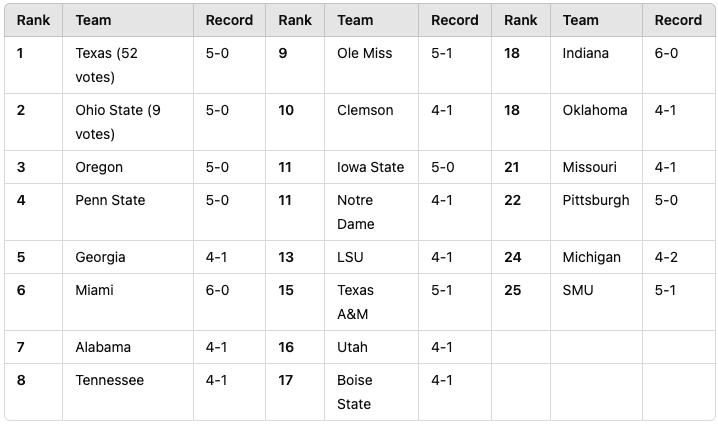
The latest Associated Press Top 25 poll reflects an unpredictable landscape in college football, with Texas reclaiming the No. 1 spot after a week-long absence. Following a stunning upset of Alabama by Vanderbilt, the Crimson Tide dropped from first to seventh, showcasing the volatility that defines the current season. This development has raised intriguing questions about the state of college football, particularly regarding the ongoing challenges stemming from the previous BCS playoff system, which featured fewer teams and arguably less parity.
Texas Back on Top
Texas returned to No. 1 with a 5-0 record, receiving 52 out of 61 first-place votes despite not playing that week. This marks the Longhorns’ third time in the top spot in two years, a rare feat highlighting their resurgence under head coach Steve Sarkisian. Ohio State, at No. 2, continues to maintain its reputation, with a perfect record bolstered by recent victories, including a convincing win over Iowa.
Parity in the Rankings
The past week exemplified the parity that has become a hallmark of college football this season. Six teams in the Top 25 lost to unranked opponents, the highest rate since 2020. This unpredictability challenges traditional powerhouses, with Alabama, Tennessee, and Michigan all suffering unexpected defeats. The chaos in the rankings also underscores the competitive nature of the current college football landscape, where any team can emerge victorious on any given Saturday.
The SEC and Big Ten Domination
The SEC and Big Ten continue to dominate the rankings, with nine teams from the SEC and six from the Big Ten appearing in the Top 25. However, the broader landscape remains competitive, as teams like Oregon, Penn State, and Miami have risen to prominence. Miami’s remarkable comeback against California reflects the resurgence a member of the “old guard” (former powerhouses), and they represent teams outside of the recent traditional powerhouses.
Challenges of the BCS Playoff System
The BCS (Bowl Championship Series) playoff system, which ran from 1998 to 2013, had significant implications for college football that still resonate today. At its core, the BCS relied on a combination of computer rankings and human polls to determine the two teams that would compete for the national championship. While this model aimed to bring clarity to the championship picture, it often resulted in controversy and frustration, particularly regarding which teams deserved a shot at the title.
Limited Opportunities
One of the most significant criticisms of the BCS system was its exclusionary nature. Only two teams were allowed to compete for the championship, meaning that any number of deserving teams were often left out of the conversation. For instance, during the 2004 season, undefeated Auburn was shut out of the title game despite an impressive record, while the BCS selected Oklahoma and USC, who were both already in the spotlight. This type of scenario was not isolated, as multiple teams across various seasons were left to argue their cases for inclusion while watching other teams compete for the title.
Impact on Traditional Rivalries and Matchups
The BCS also reshaped the traditional landscape of college football. The fixation on bowl matchups created an environment where teams were often incentivized to avoid scheduling tough opponents early in the season to preserve their undefeated status. This dynamic led to a dilution of the regular-season significance of traditional rivalries and matchups, as teams sought to position themselves in the BCS rankings rather than compete head-to-head against formidable opponents.
A Shift Towards Inclusivity
The introduction of the College Football Playoff (CFP) in 2014 marked a turning point, expanding the field to four teams and providing a more inclusive approach. While this was a step in the right direction, allowing for the participation of more deserving teams, the previous issues surrounding the BCS didn’t vanish entirely. The selection committee’s subjective nature still left room for debate regarding which teams were chosen, often igniting heated discussions among fans, coaches, and analysts.
Broader Playoff Expansion on the Horizon
As we move toward a broader 12-team playoff format set to debut in the 2024 season, the landscape is poised for even more dramatic changes. This upcoming expansion aims to increase access to the playoffs and rectify some of the shortcomings of the BCS and even the initial CFP setup. With automatic bids for conference champions and opportunities for at-large selections, more teams will have a chance to showcase their talent on a national stage.
Current Season Context
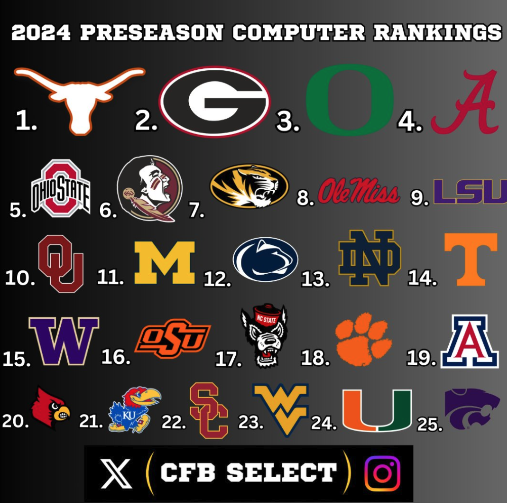
Where it all started at the top of the year…
Where we are now…
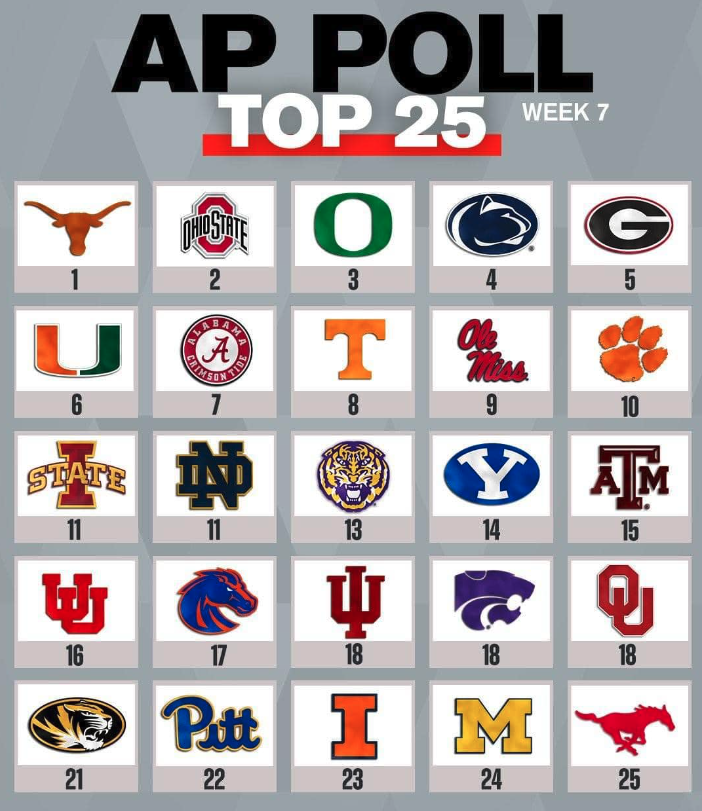
Now, in light of this year’s parity as things have progressed, the ongoing challenges of the BCS era are still evident. While the expanded playoff system offers a greater opportunity for inclusivity, the unpredictability of the current season—where multiple ranked teams fell to unranked opponents—highlights the potential for surprises and the notion that talent is widely distributed across the landscape.
The rise of teams like Oregon, Penn State, and Miami illustrates how the expanded opportunity to compete for a championship can foster competition among programs that historically may have been overlooked. This year’s rankings, which see Texas at No. 1 and Alabama at No. 7, are emblematic of a shift where previously dominant programs are now vulnerable, resulting in a reshaped hierarchy in college football.
The Plight of the Undefeated
The plight of undefeated teams outside the AP Top 25 often revolves around the complex criteria that determine rankings, which include not only win-loss records but also the quality of opponents, strength of schedule, and performance metrics. In college football, a team can boast an unblemished record yet still find itself overlooked due to a perceived lack of competition or marquee victories. For instance, if an undefeated team has primarily faced lower-tier opponents or is from a conference that is viewed as weaker, it may struggle to gain the recognition it deserves. The selection committee often weighs these factors heavily, prioritizing not just wins but the context of those wins, which can leave some deserving teams languishing outside the rankings.
Additionally, the weighting associated with the Top 25 ranking involves a subjective analysis of various performance metrics, such as scoring differentials, advanced statistics like SP+, and the opinions of sports writers and broadcasters. The influence of historical performance and prestige also plays a role, as teams with rich traditions and robust fan bases can sometimes receive a bias in their favor. Consequently, even undefeated teams can find themselves on the outside looking in if they don’t meet the specific criteria deemed important by those compiling the rankings. This situation underscores the intricate balance between achievement and perception in college football, where being undefeated is not always enough to secure a place in the national conversation.
Top 25 teams are still undefeated
- Texas (5-0)
- Ohio State (5-0)
- Oregon (5-0)
- Penn State (5-0)
- Iowa State (5-0)
- Indiana (6-0)
- Miami (6-0)
- Pittsburgh (5-0)
Teams outside of the Top 25 still undefeated
- Liberty (5-0)
- James Madison (5-0)
- Air Force (5-0)
The Path Forward


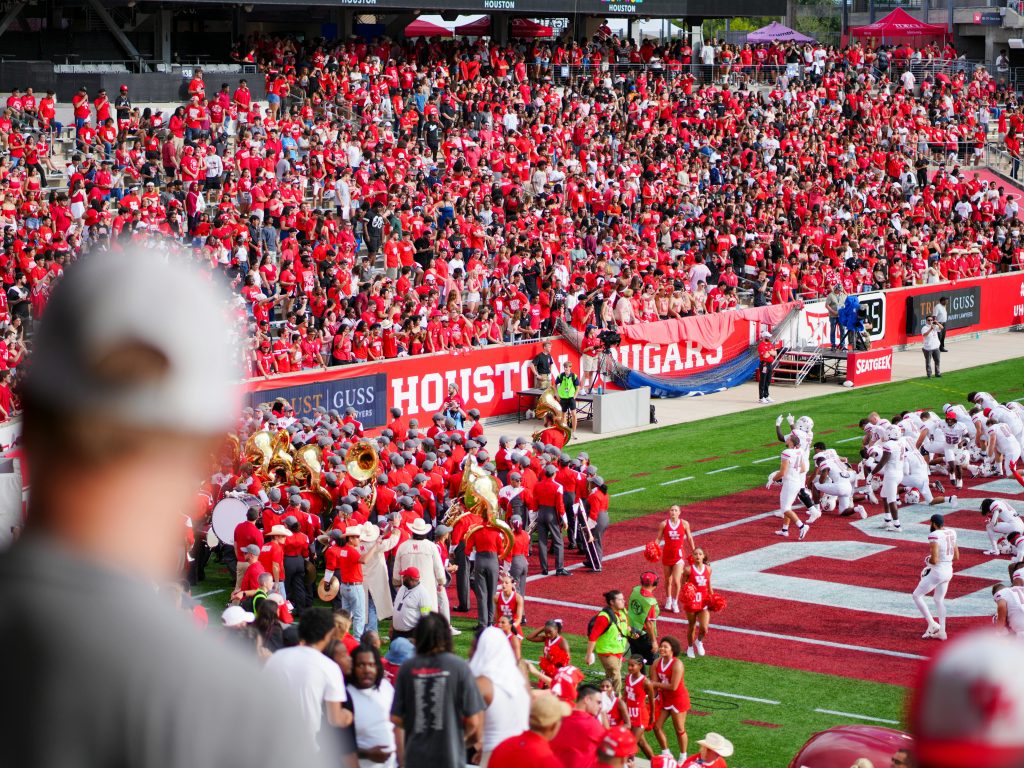
The journey from the BCS to the current College Football Playoff format underscores a significant evolution in college football, emphasizing inclusivity and competitiveness. This season’s rankings serve as a reminder that the challenges of the past still linger, but the potential for growth and increased opportunity has never been greater. As we anticipate the future of college football with an expanded playoff, the focus remains on embracing the current spirit of competition, where every game matters, and every team has a shot at the title.
Looking ahead, the upcoming matchups and the evolving playoff structure will ultimately determine how far this newfound parity can take teams in their quest for glory. Key games, such as Texas vs. Oklahoma and Ohio State vs. Oregon, have implications not only for the rankings but also for the broader narrative of college football this season. With the playoff system expanding in the future, it remains to be seen how this year’s parity will impact the selection process.
(Photo Credits – Gallery: Pexels; Title Photo from Author: Bobak Ha’Eri with permission: CC-By-SA-3.0)
Conclusion
As we dive deeper into the season, the college football landscape appears as competitive as ever. The latest AP Top 25 reflects a mix of traditional powerhouses and emerging contenders, all vying for a place in the expanded playoff structure. While parity is more apparent, it does not fully address the limitations imposed by the previous BCS system. The journey to the College Football Playoff will undoubtedly be thrilling, with each week promising to bring new surprises, a fair share of bias and scrutiny, and challenges for teams striving for national recognition.